
Tipping in Korea: Do You Tip? (The Simple Answer)
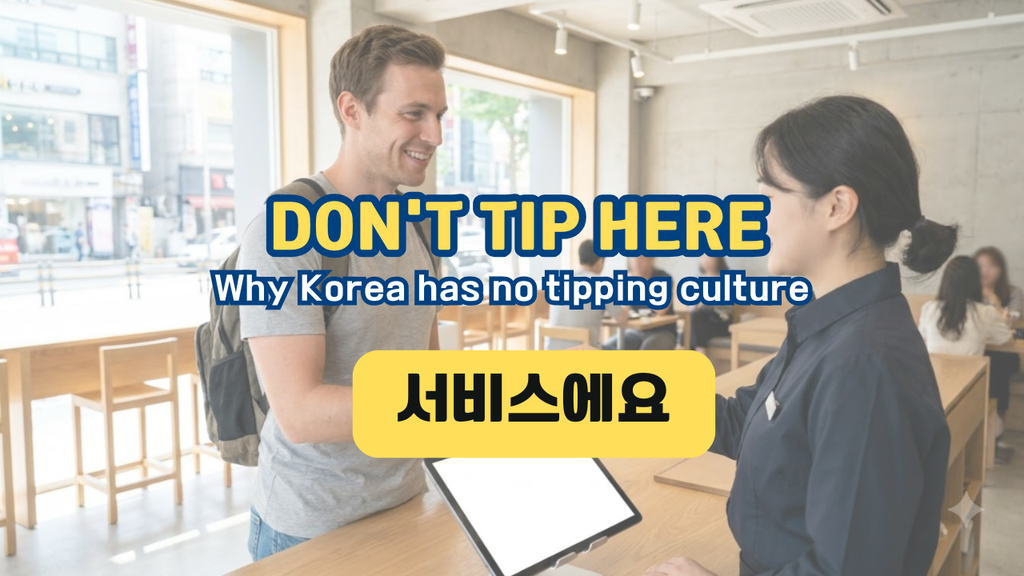
A tourist once left a 10,000-won bill tucked under his plate at my restaurant. My server spotted it, assumed he’d dropped it, and chased him half a block down the street to give it back — and honestly, the thought that it might have been for her didn’t cross either of our minds. That little scene is the clearest answer I can give you about tipping in Korea: there is no tipping culture here, and a tip left behind reads not as generosity but as forgotten money. Let me explain how it works so you never feel awkward about it.
The Short Version
Tipping is generally not expected in everyday services in Korea. Not at restaurants, not in taxis, not at hair salons, not for delivery, not at hotels. In most everyday situations, the listed price is the amount you pay unless a separate charge is clearly shown. Service is considered part of the job and already built into the price — there’s no tipped-wage system like in some countries, so no one is relying on your extra won.
This is genuinely freeing once you get used to it. No mental math at the end of a meal, no wondering what percentage is polite. You pay the number, you say thank you, you leave.
What About a “Service Charge”?
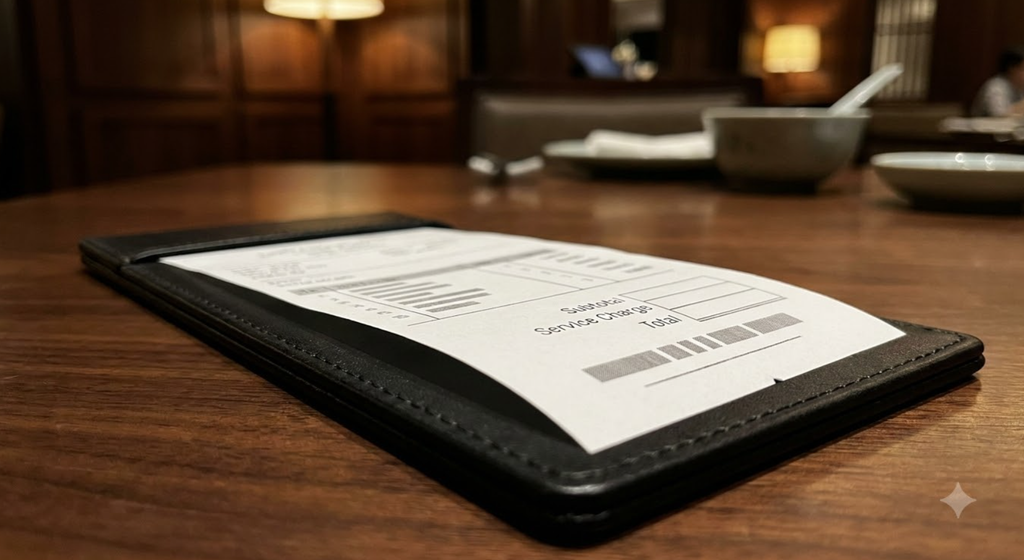
There’s one thing that looks like a tip but isn’t. Some upscale hotels and fine-dining restaurants automatically add a service charge (봉사료) — often around 10% — to your bill. That’s not a tip you choose; it’s a fixed charge already included in the total. When you see it, you don’t add anything on top. Everywhere else, there’s simply nothing extra to pay.
The Rare Gray Areas
To be complete and honest, a few situations sit slightly outside the norm:
- Private tour guides or drivers who work heavily with international travelers may not refuse a tip, since they’re used to foreign customs — but it’s still never expected.
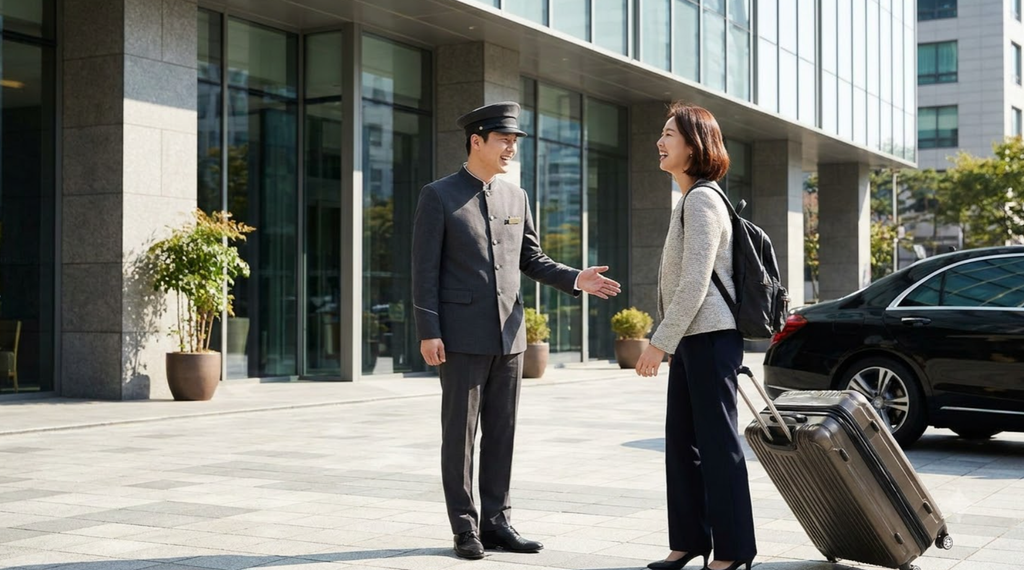
- Bellhops or personal services at luxury hotels occasionally see tips from foreign guests, again out of imported habit, not Korean expectation.
- A handful of trendy cafes have experimented with tip jars under global influence — you can comfortably ignore them.
None of these are obligations. If you tip in these narrow cases, it’s a personal choice, not a social rule. In everyday life — your meals, taxis, haircuts, deliveries — the answer stays a clean no.
The Only Phrases You Need
Because there’s no tipping, the “money phrases” here are just about paying normally:
- I’ll pay now → 계산할게요 (gye-san-hal-ge-yo)
- Do you take card? → 카드 되나요? (ka-deu doe-na-yo?)
And one lovely word worth knowing: if a staff member ever gives you something free — an extra side, a drink on the house — they’ll often say “서비스예요” (seo-bi-seu-ye-yo), meaning “it’s complimentary.” That’s the closest thing Korea has to a tipping culture, and it flows from the staff to you, not the other way around.
So keep your cash in your pocket. When you’ve finished a great meal and you feel that reflex to leave a little something, just offer a warm “잘 먹었습니다” (that was delicious) instead — in Korea, that genuinely means more than money on the table. It connects to nearly everything else here, from paying your fare in a Kakao Taxi to splitting a restaurant bill: the number is the number, and that’s all there is to it.
고구마


댓글 0
첫 댓글을 남겨보세요.