
How to Order Food Not Spicy in Korea (Survival Guide)
I keep a carton of milk in the restaurant fridge that isn’t for coffee or cooking — it’s for customers. Specifically, it’s for the brave souls who order our spicy stew insisting they can handle it, then look up ten minutes later with watering eyes and a new respect for Korean chili. I’ve handed that milk across the counter more times than I can count. If you’re worried about the heat, this guide on how to order food not spicy in Korea will keep you comfortable — and I’ll be honest with you about what’s actually possible.
The Honest Truth First
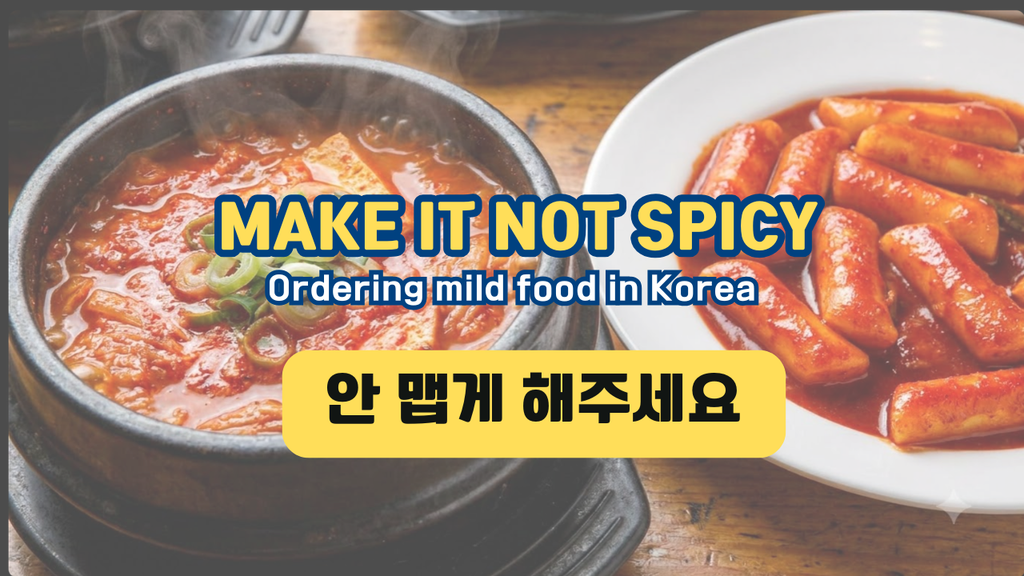
Some Korean dishes cannot easily be made non-spicy because chili-based ingredients are part of the recipe.The heat isn’t a topping you can leave off — it’s built into the base. A 김치찌개 (kimchi stew) or 떡볶이 gets its entire character from the chili paste it’s cooked in. Asking for it “not spicy” is a bit like asking for a non-tomato tomato sauce.
So you have two strategies: ask for less heat where it’s possible, and choose dishes that are naturally mild in the first place. The second one is your real secret weapon.
The Phrases to Ask
When a dish can be adjusted (stir-fries, some noodle dishes, cooking-to-order spots), these help:
- Please make it not spicy → 안 맵게 해주세요 (an maep-ge hae-ju-se-yo)
- Please make it less spicy → 덜 맵게 해주세요 (deol maep-ge hae-ju-se-yo)
- Is this spicy? → 이거 매워요? (i-geo mae-wo-yo?)
- Do you have something not spicy? → 안 매운 거 있어요? (an mae-un geo i-sseo-yo?)
That last one — “안 매운 거 있어요?” — is honestly the most useful phrase in this whole article. Instead of fighting a spicy dish, you let the staff point you to a mild one.
Order These Instead (Naturally Mild Dishes)
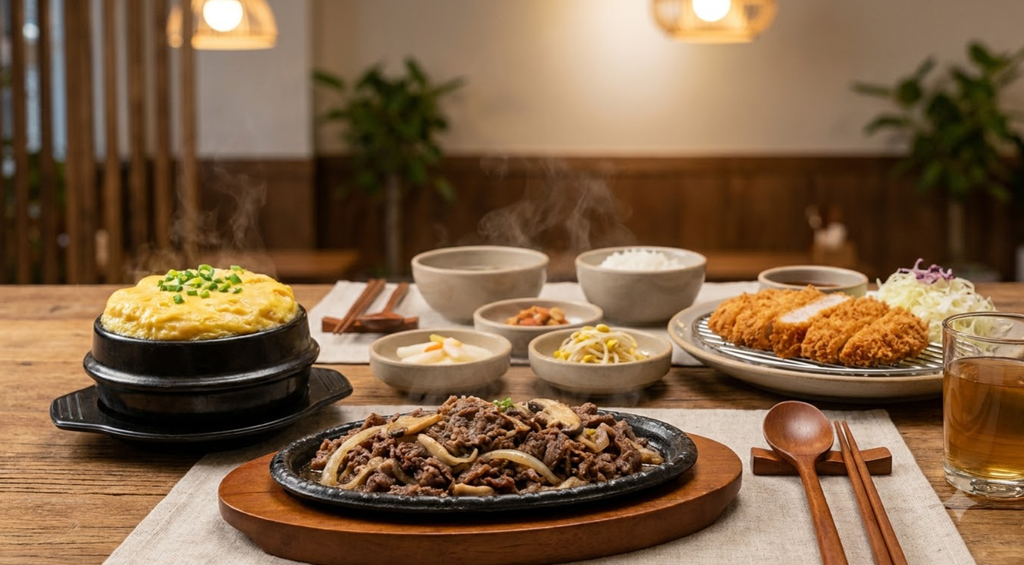
This is the list I actually give nervous customers. All of these are delicious and mild by nature:
- 불고기 (bulgogi) — sweet marinated grilled beef
- 갈비 (galbi) — marinated short ribs
- 계란찜 (gyeran-jjim) — savory steamed egg, soft and soothing
- 김밥 (gimbap) — seaweed rice rolls (skip the spicy-tuna kind)
- 만두 (mandu) — dumplings, steamed or fried
- 삼계탕 (samgyetang) — ginseng chicken soup, rich and gentle
- 잔치국수 (janchi-guksu) — warm noodle soup in a mild broth
- 돈까스 (donkkaseu) — Korean-style pork cutlet
Order any of these and you’ll eat happily without a single bead of sweat.
When It’s Too Hot Anyway
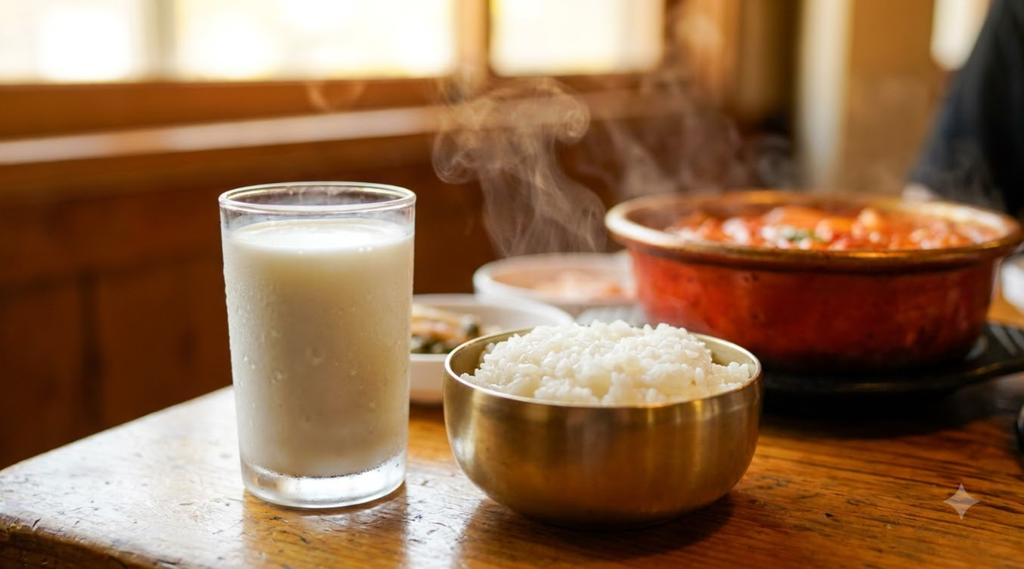
Say you misjudge it — it happens to everyone. If your mouth is on fire, skip the water (it spreads the heat) and reach for milk, rice, or something starchy, which actually calm the burn. And the phrase to remember, the one my milk-carton customers eventually gasp out:
- It’s too spicy → 너무 매워요 (neo-mu mae-wo-yo)
There’s no shame in it. Korean spice is a genuine adjustment, and even locals have dishes they consider too hot.
One more tip for ordering in, since so much eating in Korea is delivery: when you fill out the request box, you can add “안 맵게 해주세요” there too — the same note works whether you’re ordering delivery or grabbing a bite from a street cart. Just remember that for the truly spicy classics, the kindest thing you can do for yourself is order something mild instead — and save the fire for when you’re ready to earn it.
고구마


댓글 0
첫 댓글을 남겨보세요.