
How to Leave a Gathering Politely in Korea
At Korean group dinners, there’s a quiet art to being the first one to leave — and I’ve watched more than one foreign colleague sit trapped for hours, drink after drink, with no idea how to bow out without seeming rude. It’s one of those unwritten skills nobody hands you. Learning the etiquette of leaving a gathering in Korea matters more than it sounds, because here, slipping away at the wrong moment or with the wrong words can dent the group’s mood — while a graceful exit leaves everyone feeling warm. As a Korean who has navigated countless dinners and 회식 (company gatherings), let me give you the exit script.
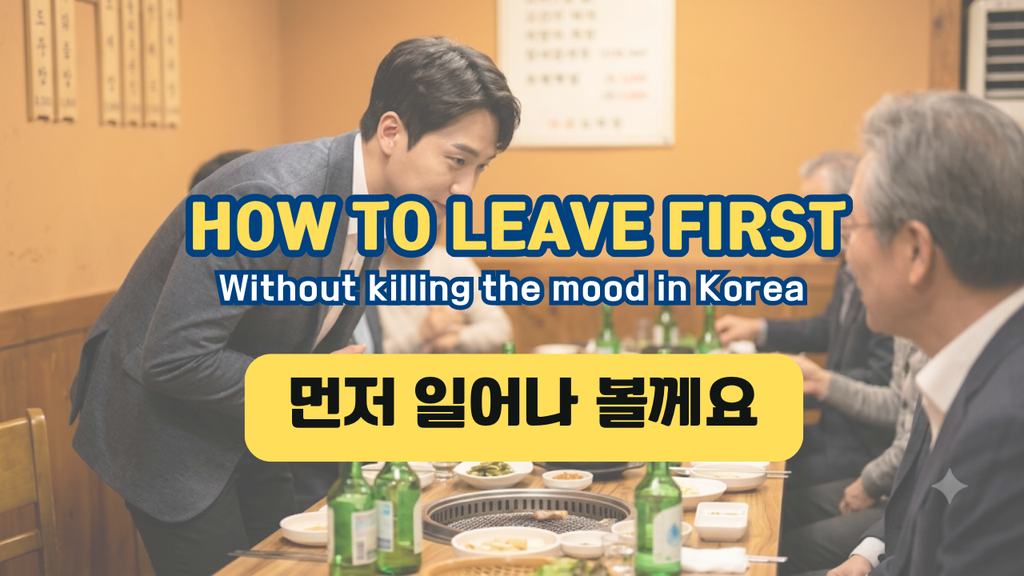
Why Leaving Early Is Delicate
Korean social life places real weight on group harmony and the collective mood (분위기, bun-wi-gi). Leaving abruptly can sometimes affect the atmosphere of a group gathering, so a brief goodbye is generally considered considerate.
There’s also a hierarchy layer, especially at work gatherings: traditionally, juniors don’t leave before their seniors. That norm is loosening, but the instinct remains — leaving abruptly, without acknowledging the group or the senior person, can read as dismissive of everyone still there. The good news is that a few well-chosen phrases handle all of this smoothly.
The Graceful Exit Phrases
Here’s your toolkit — Korean, pronunciation, meaning. The core move is announcing that you’ll get up “first,” which politely acknowledges you’re leaving before the others.
- I’ll get going first. → 먼저 일어나 볼게요 (meon-jeo il-eo-na bol-ge-yo)
- I’ll head out first. → 먼저 가 볼게요 (meon-jeo ga bol-ge-yo)
- Excuse me, I’ll leave first. (formal) → 저 먼저 실례하겠습니다 (jeo meon-jeo sil-lye-ha-get-seum-ni-da)
Pair the exit with a warm closer so you leave on a high note:
- I had a great time today. → 오늘 즐거웠어요 (o-neul jeul-geo-wo-sseo-yo)
- Let’s see each other again. → 다음에 또 봬요 (da-eum-e tto bwae-yo)
That “다음에 또 봬요” is a warm parting pleasantry, close cousin to the “let’s eat sometime” phrase — kind and connective, without committing to a hard plan.
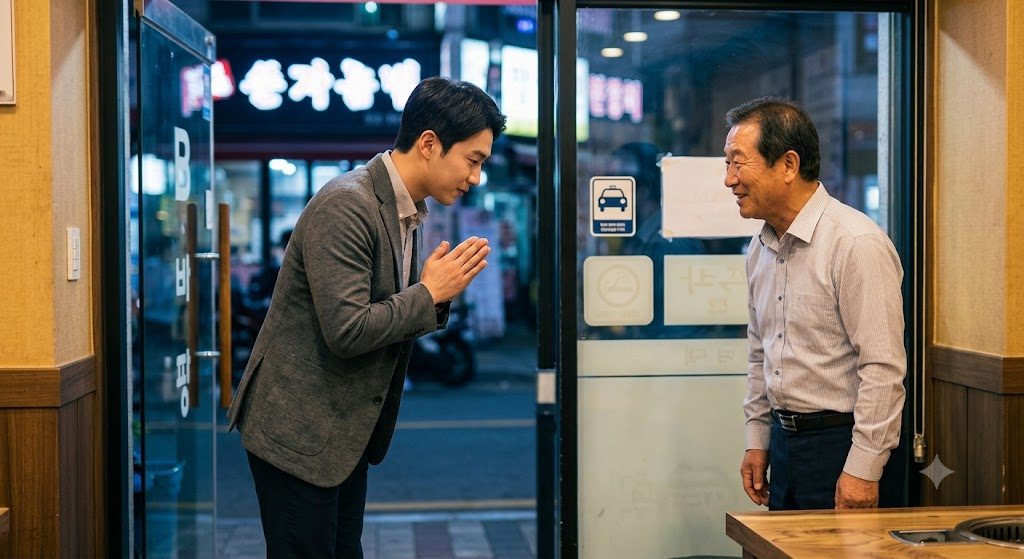
Always Give a Little Reason
A bare “I’m leaving” can feel abrupt; a soft reason makes it gracious. Koreans almost always attach one, and there’s a culturally perfect excuse:
- Because it’s the last train. → 막차 시간이라서요 (mak-cha si-gan-i-ra-seo-yo)
- Because I have to get up early tomorrow. → 내일 일찍 일어나야 해서요 (nae-il il-jjik il-eo-na-ya hae-seo-yo)
The 막차 (last train/subway) excuse is golden — Korea’s transit stops around midnight, so “막차 시간이라서요” is universally understood and accepted. No one argues with the last train.
회식 and the Art of Rounds (차수)
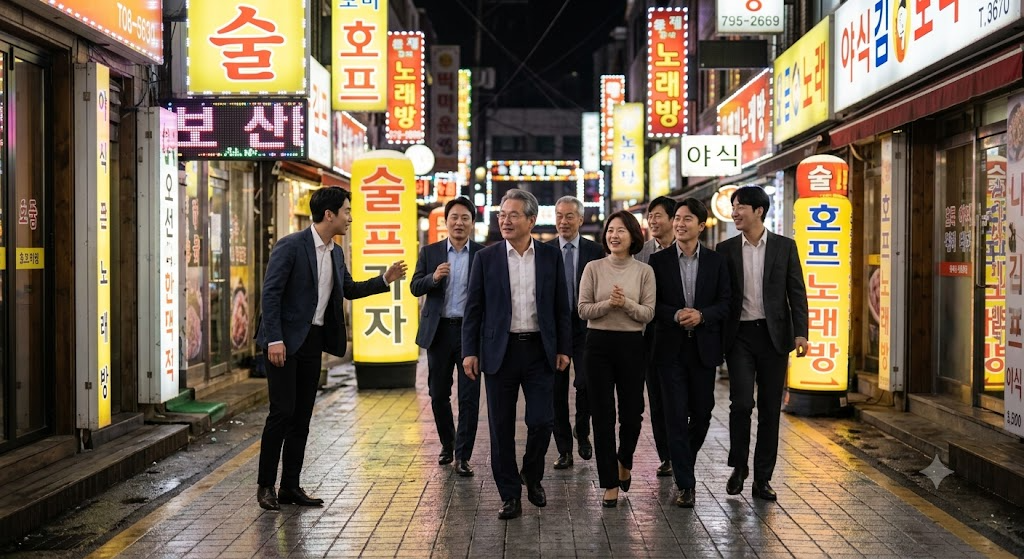
Company dinners (회식, hoe-sik) often run in rounds (차수) — 1차 (dinner), then 2차 (drinks elsewhere), sometimes 3차 (karaoke). The single best-kept secret for leaving is that the gap between rounds is the natural exit point. Slipping away after 1차, as the group reshuffles to move to 2차, is far smoother than vanishing mid-meal. A quick “저는 여기까지 하고 먼저 들어가 볼게요” (I’ll wrap up here and head home first) at that transition is clean and polite.
The Goodbye Itself: 가세요 vs 계세요
Korean has two different goodbyes depending on who’s moving, and mixing them up is a classic learner slip:
- To people who are staying, you say → 안녕히 계세요 (an-nyeong-hi gye-se-yo) — “stay well.”
- To people who are leaving, you say → 안녕히 가세요 (an-nyeong-hi ga-se-yo) — “go well.”
Since you’re the one leaving a gathering, you’ll usually say 안녕히 계세요 to those remaining. And a lovely, caring line to offer anyone heading home is 조심히 들어가세요 (jo-sim-hi deul-eo-ga-se-yo) — “get home safely.”
The Follow-Up Text
Here’s a small touch that makes a big impression: after you get home, send a quick message to the host or the group. Something like “잘 들어가셨어요? 오늘 정말 즐거웠어요” (Did you get home okay? I really enjoyed today). This little after-care closes the evening warmly and is exactly the kind of thoughtful gesture that builds relationships here — the same warmth that runs through all of Korean social communication.
Reading the Moment (Nunchi)
Finally, timing is nunchi. Pick a natural lull rather than cutting off a lively moment, thank the senior or host directly, and don’t over-apologize — one clean, warm exit line is better than three anxious ones. Announce, thank, give your reason, say 안녕히 계세요, and go. Done well, leaving early actually makes you look considerate, not rude.
FAQ
Is it rude to leave a Korean gathering early?
Not if you do it gracefully — announce you’re leaving “first” (먼저 일어나 볼게요), give a light reason, and thank the group. Slipping out silently is what feels rude.
What’s the best excuse to leave?
The last train — “막차 시간이라서요.” It’s universally understood and accepted since transit stops around midnight.
When should I leave a 회식?
The gap between rounds (after 1차, before 2차) is the smoothest natural exit point.
Do I say 안녕히 가세요 or 안녕히 계세요 when I leave?
Say 안녕히 계세요 (“stay well”) to those staying, since you’re the one leaving. 안녕히 가세요 is for people who are departing.
The Bottom Line
Once you can announce “먼저 일어나 볼게요,” lean on the trusty 막차 excuse, exit between rounds, and say the right goodbye, leaving a gathering in Korea becomes effortless — and you’ll leave the mood intact instead of dented. Read the moment, thank the host, and send a warm text after. It ties together everything in this series: the parting pleasantries and the unspoken cues you learn to read. That colleague who once sat trapped for hours? He now bows out after 1차 with a smile and a “다음에 또 봬요.” After this, so will you — and with that, you’ve got the whole toolkit for real Korean daily life.
고구마





댓글 0
첫 댓글을 남겨보세요.