
How to Respond to Compliments in Korea (Modesty)
The first time you compliment a Korean friend and they immediately fire back “아니에요, 아니에요,” hands waving as if you’d accused them of something, you might wonder if you said the wrong thing. You didn’t — you just witnessed one of the most charming reflexes in Korean culture. Understanding responding to compliments in Korea is genuinely useful, because In some situations, responding to praise with a little modesty may feel more natural, while a simple “감사합니다” is also common, especially among younger people. As a Korean who deflects compliments on pure instinct, let me explain what’s happening and how to handle it gracefully — in both directions.

Why Koreans Deflect Compliments
At the heart of it is 겸손 (gyeomson), modesty — a deeply valued social virtue in Korea. Openly agreeing with praise (“yes, I am good at this”) can come across as 잘난 척 (jal-nan cheok), showing off, which is one of the least attractive things you can do socially here.
So the polite move is to soften, deflect, or gently deny the compliment. It’s not false insecurity — it’s a courtesy that signals “I don’t think I’m above you.” The reflexive “아니에요” is essentially a way of staying humble and keeping the relationship warm and equal. Once you see it as good manners rather than genuine self-doubt, it makes complete sense.
The Standard Deflections
Here’s the toolkit Koreans reach for when praised — Korean, pronunciation, meaning:
- 아니에요 (a-ni-e-yo) — “No, not at all.” The all-purpose deflection.
- 아유, 뭘요 (a-yu, mwol-yo) — “Oh, it’s nothing.” Warm and casual.
- 별말씀을요 (byeol-mal-sseum-eul-yo) — “You’re too kind / don’t mention it.” Polite and gracious.
- 운이 좋았어요 (un-i jo-a-sseo-yo) — “I just got lucky.” Credits luck instead of skill.
- 아직 멀었어요 (a-jik meor-eo-sseo-yo) — “I still have a long way to go.” Common for praise about ability.
- 과찬이세요 (gwa-chan-i-se-yo) — “You’re overpraising me.” More formal, elegant.
Notice the strategy: rather than accept, you either deny, credit luck, or point to how much room you have left to grow. Any of these lands as gracious.
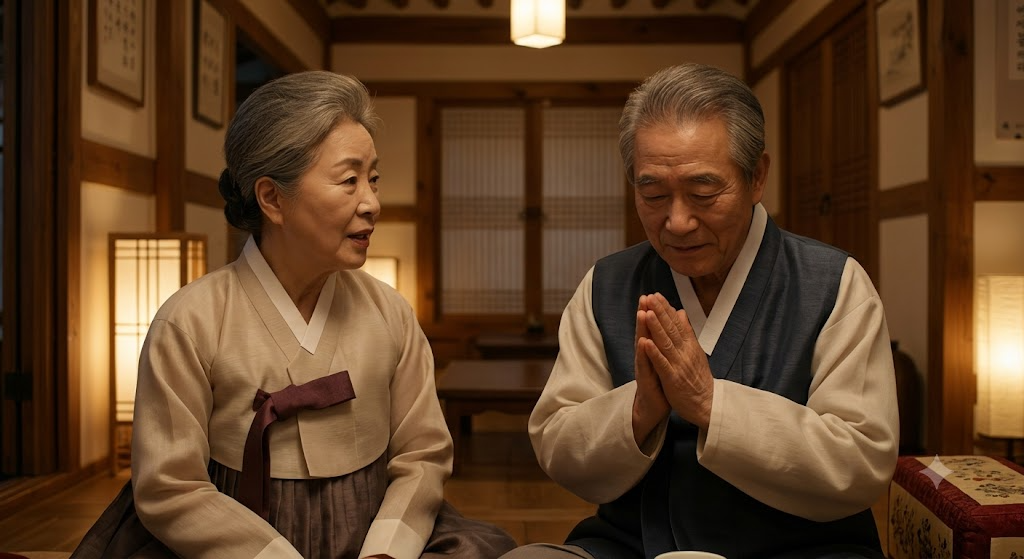
Different Compliment Scenarios
The deflection flexes to fit the situation:
- Appearance (“You look great today!”) → “아니에요~” with a little laugh, or a compliment right back: “OO 씨가 더 예뻐요” (you look even nicer).
- Skill (“Your Korean is so good!”) → “아직 멀었어요” (I still have a long way to go) is the perfect humble reply — and a huge favorite from Korean listeners.
- Food you made (“This is delicious!”) → “입에 맞으실지 모르겠어요” (I wasn’t sure it’d suit your taste) downplays gracefully.
Complimenting back is especially common — it returns the warmth while keeping the spotlight off yourself.
The Modern Shift (Be Balanced)
Here’s an honest update: this is changing. Younger Koreans, influenced by global culture, increasingly accept compliments more directly — a bright “감사합니다!” (thank you!) is now perfectly normal, especially among friends. The hardcore reflexive denial is softening with each generation.
So you’re not required to deny praise anymore. The sweet spot today is often a blend: a warm thank-you with a touch of humility — “감사합니다, 아직 배우는 중이에요” (thank you, I’m still learning). That combination feels both gracious and modest, and it works across generations.

How to Give Compliments (and Expect Deflection)
When you compliment a Korean, don’t be thrown when they wave it off — that’s the expected dance, not rejection of your kindness. You can even gently insist:
- Really, I mean it! → 진짜예요! (jin-jja-ye-yo!)
- No, you really are! → 아니에요, 진짜 잘하세요! (no, you really are good!)
This little back-and-forth — you praising, them deflecting, you insisting — is a warm social ritual. Leaning into it makes you feel fluent in the culture, not just the language. It’s the same reading-the-unspoken skill behind reacting naturally in conversation.
How to Respond Yourself
When you’re on the receiving end, aim for graciousness with a dash of humility:
- Safe and modest → 아니에요, 감사합니다 (no, but thank you).
- For skill praise → 아직 멀었어요 (I still have a long way to go).
- Warm and modern → 감사합니다! 아직 배우는 중이에요 (thank you! still learning).
Avoid a flat “I know, right?” — even if it’s true, it can read as 잘난 척. A little modesty is never the wrong call here.
FAQ
Why do Koreans say “아니에요” when I compliment them?
It’s modesty (겸손). Openly accepting praise can seem like showing off, so deflecting keeps things humble and warm. It’s good manners, not real self-doubt.
Is it rude to just say “thank you” to a compliment in Korea?
Not anymore, especially among younger people — a bright “감사합니다” is fine. Adding a touch of humility (“still learning”) makes it land even better.
What should I say when praised for my Korean?
“아직 멀었어요” (I still have a long way to go) is a favorite modest reply. “감사합니다, 아직 배우는 중이에요” blends thanks with humility.
Should I insist when someone denies my compliment?
A gentle “진짜예요!” is a warm part of the ritual. The praise–deflect–insist exchange is normal and friendly.
The Bottom Line
Once you understand responding to compliments in Korea — the modest reflex of “아니에요,” the graceful “과찬이세요,” and the modern blend of thanks-with-humility — you’ll stop worrying that you said something wrong and start playing the social game like a local. Deflect gracefully, compliment back, and lean into the warm praise-and-deny dance. It sits right beside reacting naturally with the right words and reading what Koreans leave unsaid. That hand-waving “아니에요” you’ll get? After this, you’ll know it’s a compliment to your cultural fluency, too.
고구마





댓글 0
첫 댓글을 남겨보세요.