
How to Read and Share a Korean Street Address
A Korean street address can identify the right building while still leaving a delivery person unable to find your unit. The official road-name address uses a road name and building number; an apartment or office delivery may also need a separate building, floor or unit detail. Keep these two layers distinct when copying an address.
Identify the road and building number
In a sample such as 서울특별시 ○○구 예시로 12, the city and district narrow the area, 예시로 is a fictional road name, and 12 is a fictional building number. This is an explanatory example, not an operating address. A road ending in 대로, 로 or 길 is still part of the road name. A number after it identifies a building, not an apartment unit.
The government’s Road Name Address Information System explains the road name, building number and 상세주소 (detailed address) as separate components. Use its search to verify an actual building rather than translating a map label by guesswork.
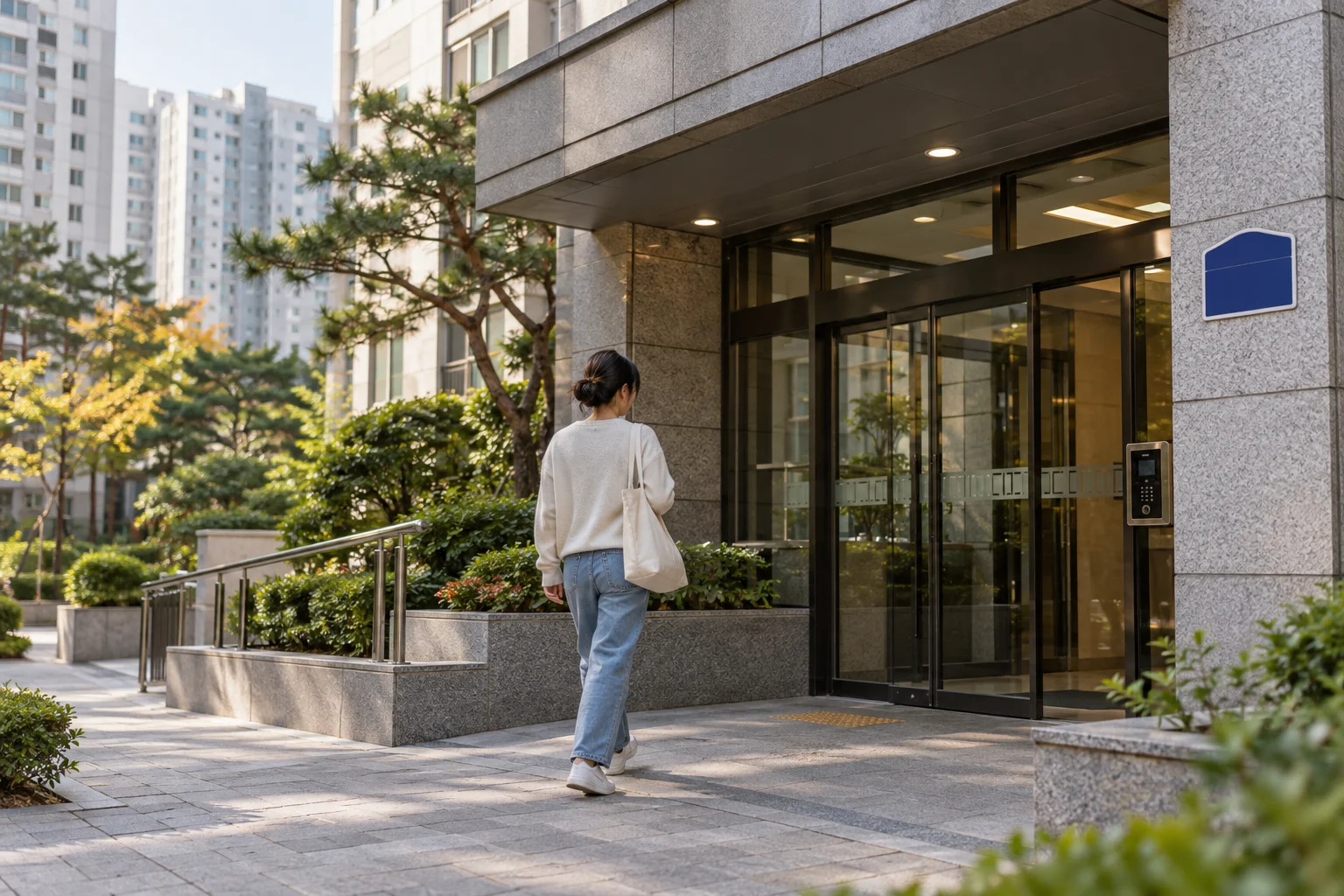
Find the postal code and detailed address
Search a known building name, road address or old land-lot address (지번주소) on the official site. Check the district, building name and map position before copying. Then add your own apartment building number (동), floor (층) and unit (호) only where the form asks for a detailed address. A five-digit postal code belongs in the postal-code field. Do not post your full private unit address in a public comment or screenshot.
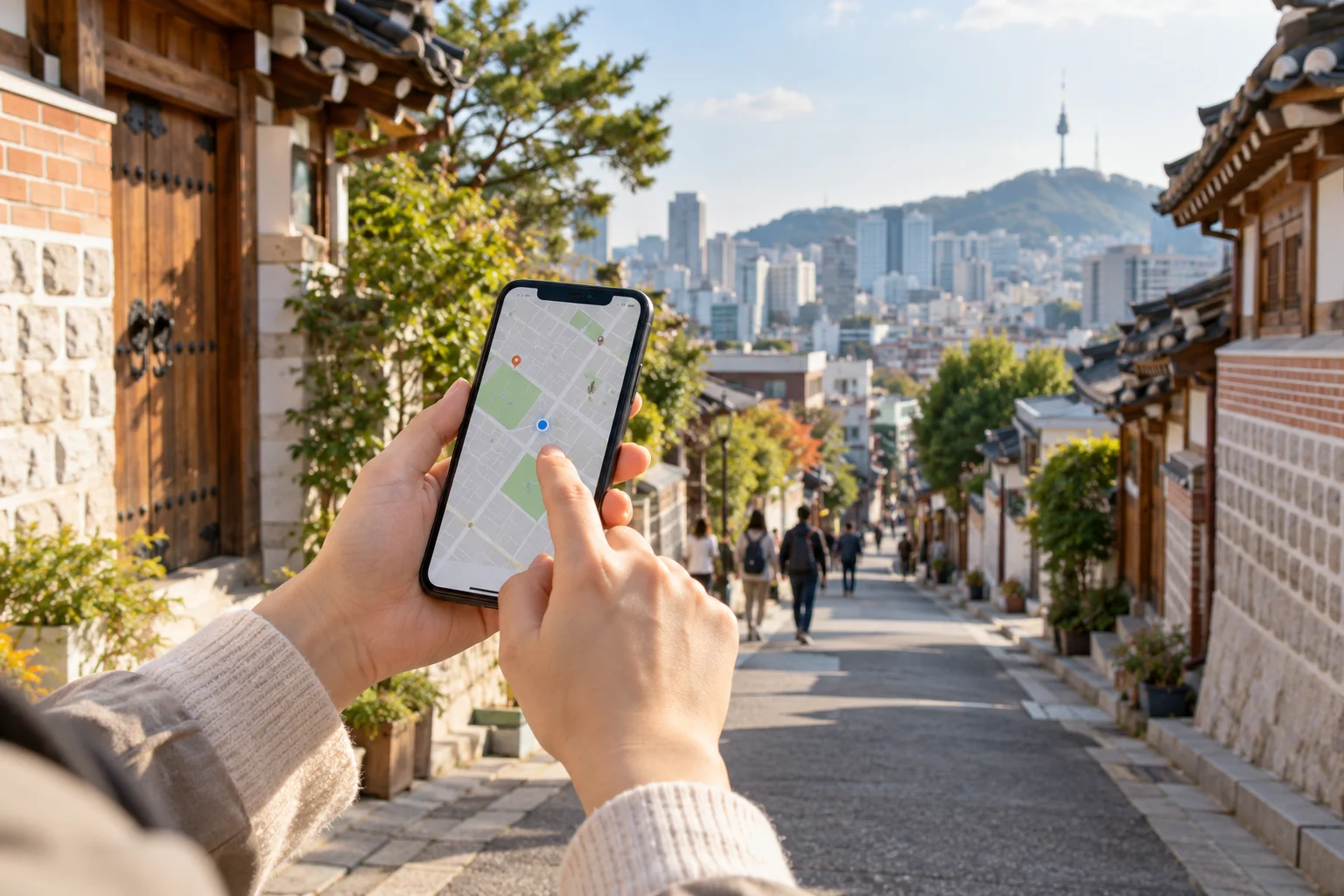
Road-name and land-lot addresses are different
Older directions may use neighborhood and lot numbers rather than a road name and building number. Search either format on the official site and confirm that the results point to the same building. Do not combine a road name with a land-lot number into a new address. If a form rejects what you pasted, try the official road-name result and place unit details in the second line.
Share an address someone can actually use
- Copy the official road-name address and postal code.
- Add the building name and private unit details only for the intended recipient.
- Share the place’s map pin separately when the entrance is hard to find.
- For a delivery, check whether the entrance, reception or parcel room has special instructions.
Useful words: 도로명주소 (road-name address), 건물번호 (building number), 우편번호 (postal code), 상세주소 (unit-level detail), and 지번주소 (land-lot address). When a driver asks “몇 동 몇 호예요?”, they want the building and unit number, not the street number repeated.
Source checked September 30, 2026: official Juso portal linked above. Examples are fictional; verify any real destination and protect private address details.
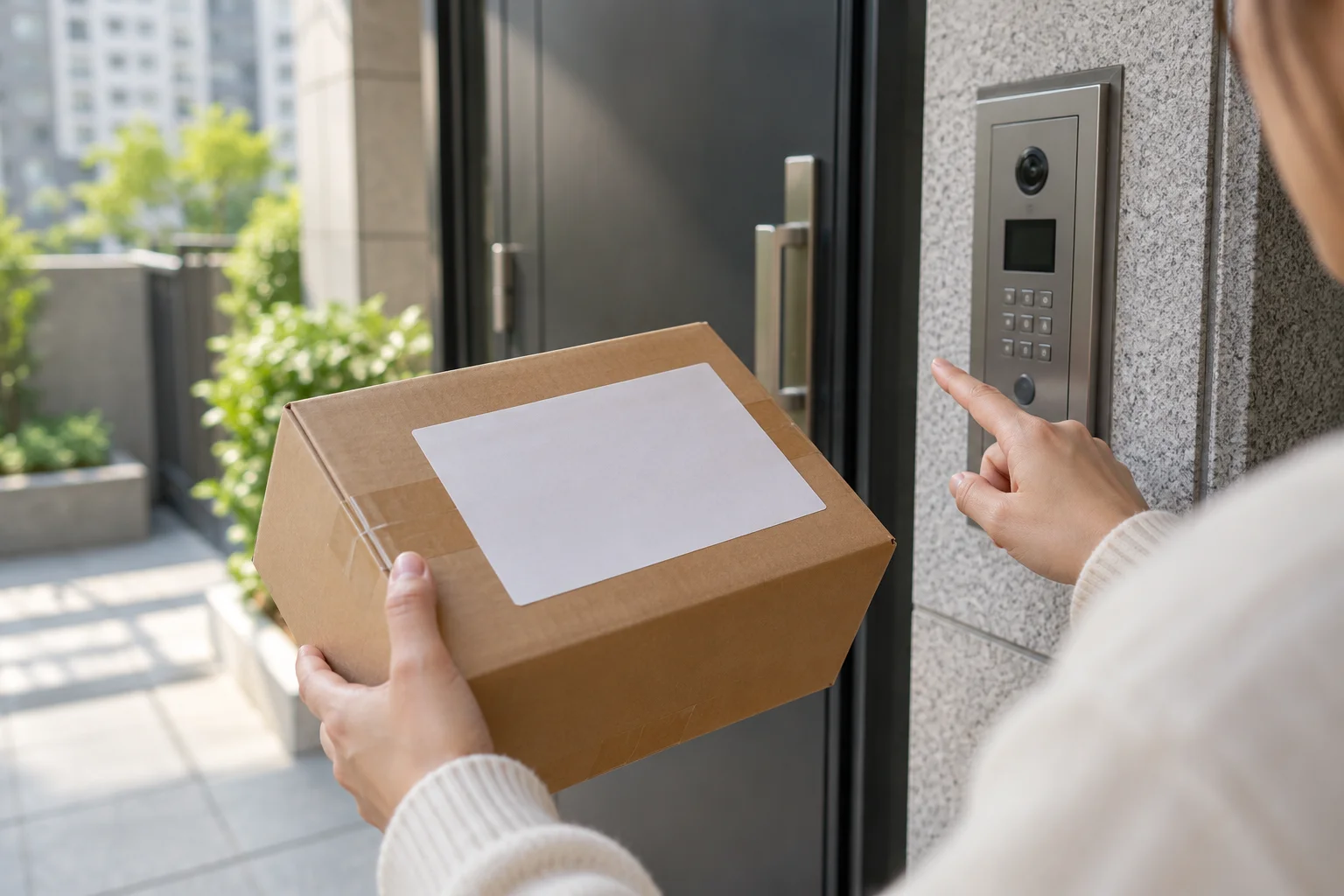
Match each part to the form field
| Field | What belongs here | Common mistake |
|---|---|---|
| 우편번호 — upyeonbeonho | The postal code from the verified result | Entering a building or unit number |
| 기본주소 — gibonjuso | The road-name address from address search | Combining road-name and land-lot formats |
| 상세주소 — sangsejuso | Your building, floor or unit details | Leaving the unit out when several households share a building |
For a fictional unit example, 101동 502호 means building 101, unit 502. It does not mean street building number 101502. Some small buildings have no apartment building number; use the details actually assigned to your residence rather than filling every label.
If a delivery app finds the building but places its pin at the rear entrance, check the entrance separately. An address search and a map pin answer different questions: one identifies the building; the other helps the driver reach it. Continue with our food delivery guide once the address is correct.
Common questions
Is the building number the same as my apartment unit number?
No. The road-name address identifies the building. Apartment building, floor and unit information belongs in the detailed-address field when needed.
Should I combine a road-name address with a land-lot number?
No. Search the official address portal and use a verified result rather than mixing the two formats.
고구마



Comments 댓글 0
Be the first to comment 첫 댓글을 남겨보세요.