
Lost Something on Korean Transit? A Step-by-Step Recovery Plan
If you discover a missing item just after leaving a train, bus or taxi, write down the route, direction, time and where you sat before those details fade. The fastest first contact may be the operator that still has the vehicle or station. A wider search through the police lost-property portal is the next step if it has already been handed in elsewhere.
Write down the details first
For a subway trip, record the line, direction, boarding and exit stations, approximate train time and car number if known. For a bus, note the route number, direction, boarding and exit stops and time. For a taxi, keep the receipt, booking history, vehicle number or payment record. Describe the item’s color, brand and distinctive marks without publicly posting private identifiers or the full contents of a wallet.

Contact the likely holder
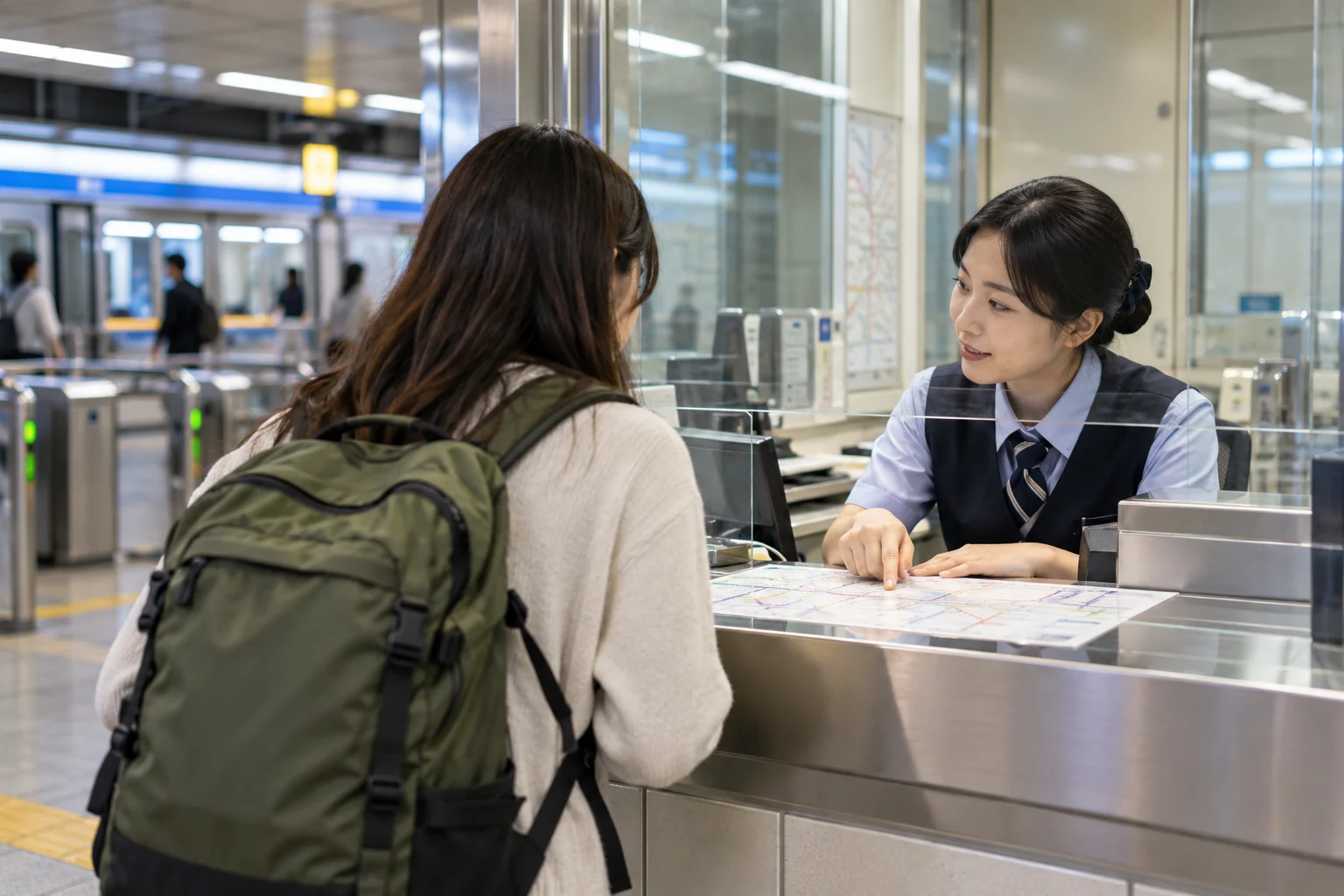
At a subway station, ask the station office or the operator for that line; different lines can have different operators. For a bus, contact the route operator or local transit information service with the route and time. For an app-booked taxi, use the trip record and the app’s support channel. If you are still near the station or stop, ask promptly: an item may not yet have reached a central lost-property office.
“분실물을 찾고 있어요” (Bunsilmureul chatgo isseoyo) means “I am looking for a lost item.” Add “[line/route]에서 [time]쯤 잃어버렸어요” (“I lost it on [line/route] at around [time]”). Show staff a photo if you have one.
Search and report through LOST112
The Korean National Police Agency’s LOST112 English guide explains searching for found items and reporting a loss. Its reporting instructions describe online and in-person paths. A missing search result does not prove nobody found the item: handover and registration take time. Repeat the search with alternative item categories and dates, and follow the portal’s current instructions.
Claim it safely
Confirm the holding office, hours, item description and documents needed before travelling. Bring proof that it is yours, such as a matching photo, receipt or a description of a distinctive mark; follow the office’s identity-verification rules. Do not pay a stranger claiming to hold it or publish account numbers and document scans in a public post. If a wallet or phone contains sensitive access, separately protect your cards and accounts promptly.
Source checked September 30, 2026: LOST112 police guidance linked above. Individual transit operators’ procedures differ; confirm directly with the operator. Emergency or theft situations may require a different police response.

Keep a private recovery note
Write one concise note you can show each office: item type, color, route, travel direction, date, approximate time and where you sat. Keep identifying details in a private copy for ownership checks. A public listing should not reveal a full card number, passport number or a phone unlock code.
설명용 예시 — instructional example: “Black umbrella, subway Line 2, travelling toward the next station shown in my trip record, left near the seat around 2 p.m.” Replace each detail with your own information. If you do not know the train car, say so; guessing can send staff to the wrong place.
Do not submit several contradictory descriptions to different offices. Update your note when you learn where the item was transferred, and record the holding office and reference number. An online loss report and collecting a found item are separate steps; check the office’s current instructions before travelling.
If you need to reconstruct the route you travelled, our Seoul subway guide explains the line and direction signs. Use your actual trip record when describing a lost item.
Common questions
Should I contact the operator or search LOST112 first?
If the loss just happened, record your trip details and contact the likely station, route operator or taxi service promptly. Use LOST112 to search or report when the item may have been handed in elsewhere.
Does an empty LOST112 search mean my item was never found?
No. Handover and registration can take time. Check alternative categories and dates, and confirm directly with the likely holding office.
고구마





Comments 댓글 0
Be the first to comment 첫 댓글을 남겨보세요.