
How to Find a Public Toilet in Seoul
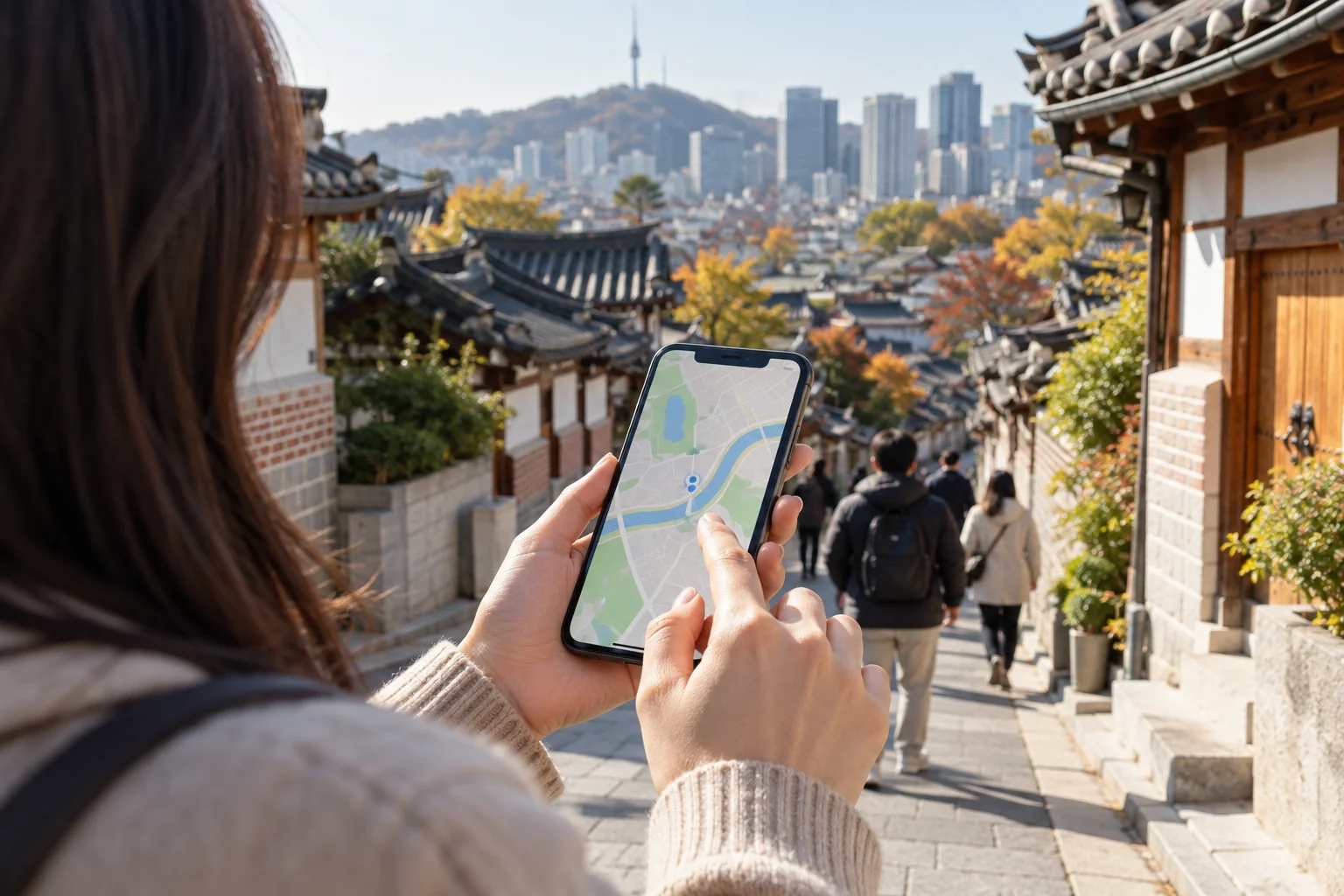
Finding a toilet in Seoul is often a two-part task: locate a facility, then find the entrance you can actually use. A map pin can put you at the right building without telling you the floor, opening time or whether the restroom is behind a restricted doorway. Ask those access questions before following the pin blindly.
Start with the Korean search word
화장실 (hwajangsil) means restroom or toilet. Searching that word near your current location can reveal options that a search for an English phrase misses. Check the result's building, entrance and current access information rather than assuming every nearby business opens its facilities to non-customers.
The Seoul Metropolitan Government's location guide explains how to find public and open-access toilets using Smart Seoul Map and local map searches. Its public-toilet map is a Seoul-specific starting point. A listing is useful location information, not a guarantee that a particular entrance is open at the moment you arrive.
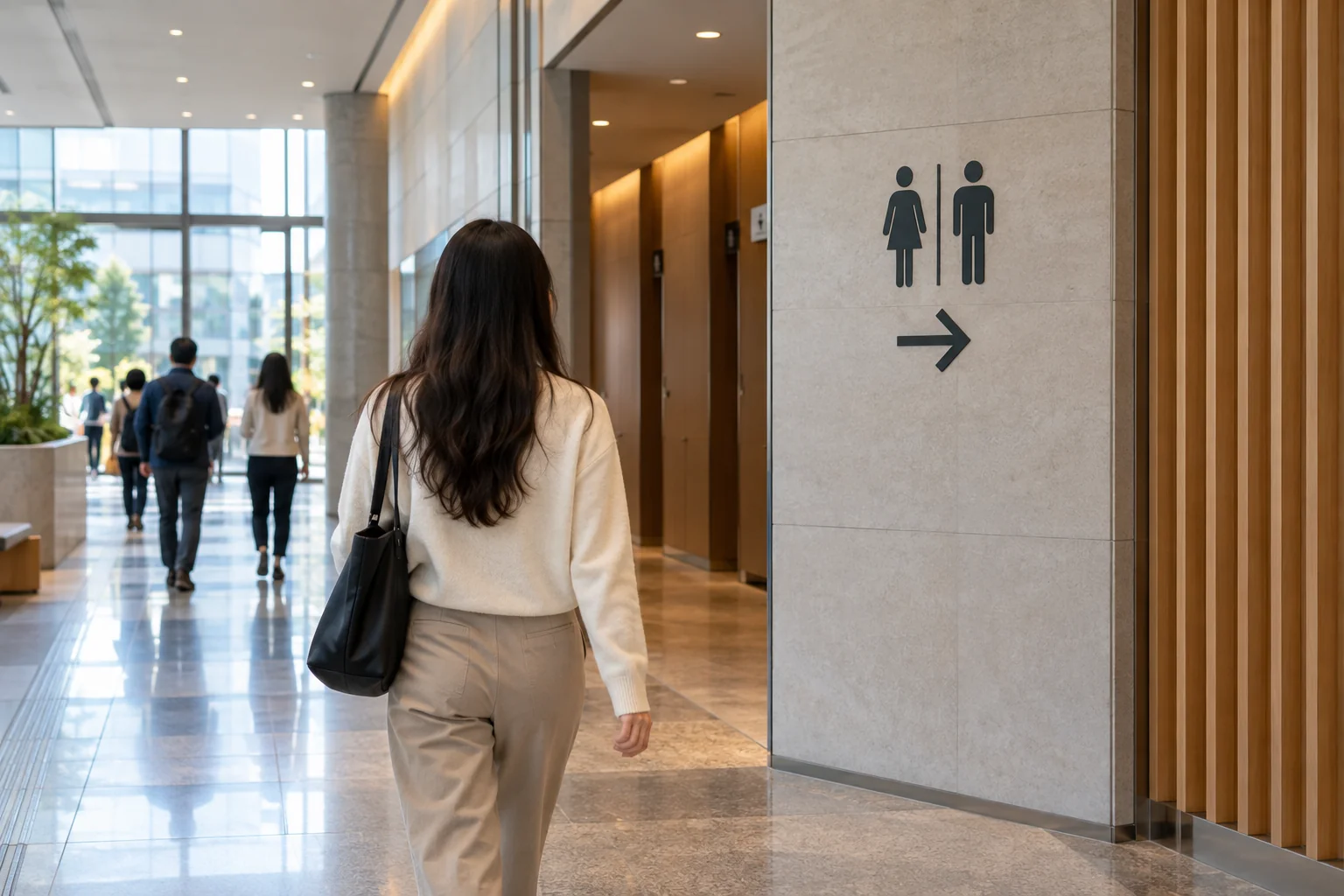
Follow the building details
Look for the restroom icon and arrows together with floor numbers. In a station, check whether the facility is inside or outside the paid area. If it is behind ticket gates, ask station staff about access rather than crossing without authorization or paying an unnecessary fare without checking.
In a shopping center or public building, find the visitor entrance and check opening hours. A ground-floor doorway may not lead directly to the facilities indicated on the map. Ask reception or an employee where you should go; a short question is usually more useful than continuing to circle the building.
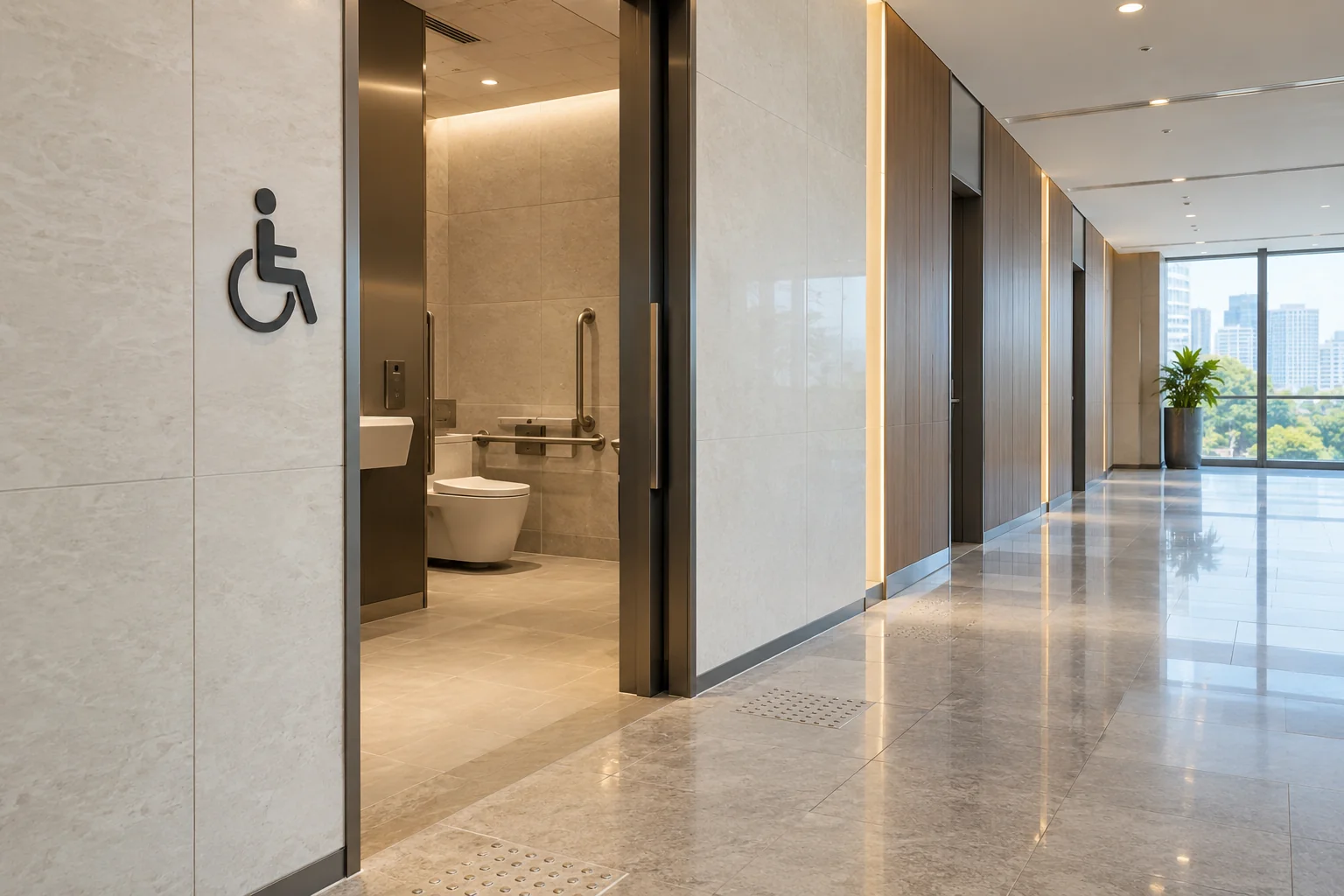
Check the facilities you need
If you need a wheelchair-accessible toilet, baby-changing equipment or assistance, ask about that specific requirement. A generic restroom marker does not prove that all those facilities are available. Check the route as well: stairs on the way can matter even if a room is labeled accessible.
Before entering a stall, check the available paper and follow the signs about disposal. Facilities differ, so do not turn a practice noticed in one building into a rule for the whole country. Respect privacy: keep photography out of occupied facilities and give staff room to clean or manage closures.
When the first option is unavailable
- Check whether you are at the correct entrance and floor.
- Read any closure notice or ask a staff member.
- If the facility requires customer or visitor access you do not have, ask where an open-access alternative is located.
- Choose the next suitable public option using the map, allowing for walking time.
- If accessibility is essential, confirm it directly instead of assuming the closest result fits your needs.
Three questions that help
화장실 어디예요? (Hwajangsil eodiyeyo?) — Where is the restroom?
몇 층에 있어요? (Myeot cheunge isseoyo?) — Which floor is it on?
지금 이용할 수 있나요? (Jigeum iyonghal su innayo?) — Can I use it now?
For accessibility, 휠체어 이용 가능한 화장실이 있나요? (Hwilcheeo iyong ganeunghan hwajangsiri innayo?) asks whether there is a wheelchair-accessible toilet.
Seoul-specific information, nationwide phrases
The municipal map linked here covers Seoul. The Korean words and building-access checks work elsewhere, but Busan or Jeju requires local facility information. This guide solves restroom access; the existing Naver Map article explains the wider navigation app.
Common questions
Can I assume a cafe toilet is public?
No. Ask about access and use the available public or open-access alternatives where necessary.
Does a restroom map prove it is open right now?
No. Confirm the relevant building entrance, opening time and any temporary closure.
Official location sources checked October 1, 2026. No particular restroom's present condition has been personally inspected for this guide.
Related guide: how to use naver map in korea.
고구마



Comments 댓글 0
Be the first to comment 첫 댓글을 남겨보세요.