
Korean Apartment Maintenance Bill: How to Read 관리비
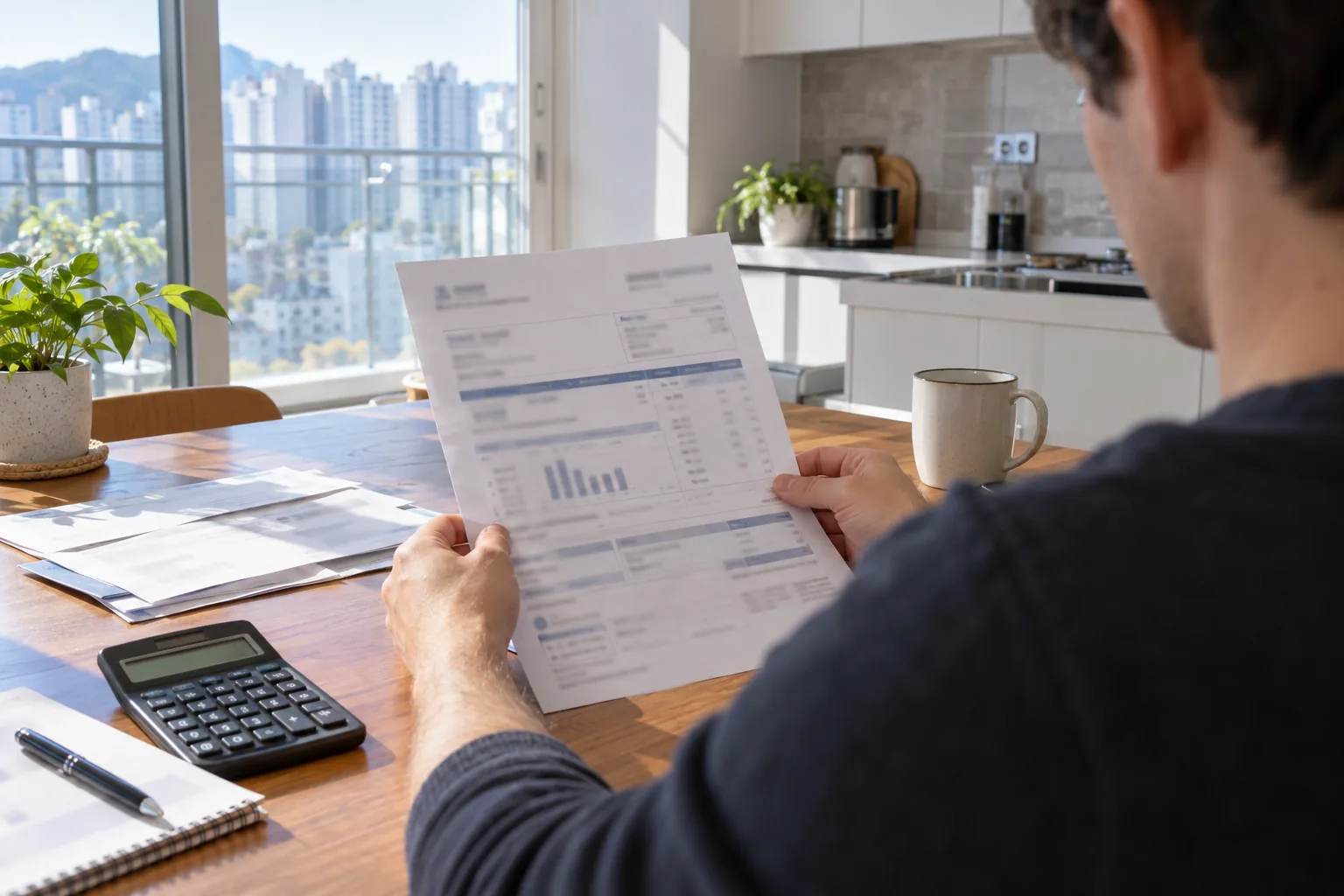
An apartment bill marked 관리비 can be confusing because it may combine shared building costs with charges for your unit’s use. Before paying, find the billing period, unit number, due date, total, and each line item. Then compare those lines with your lease and the previous bill. This guide helps you read the document; it cannot determine who legally owes a disputed charge without the contract and the building’s rules.
Start with five fields at the top
Locate 부과기간 or 사용기간 (the period covered), 동·호수 (building and unit), 납기일 (due date), 납부금액 (amount due), and 납부계좌 (payment account) if shown. Confirm the period is the month you expect: utility use and billing can occur in different months. Match the unit and payer information before making a transfer, especially after moving in or out.
If your lease says a fixed monthly maintenance charge, do not assume it covers every utility or every extra charge. Ask exactly what is included. If a bill comes through the landlord rather than the building office, request an itemized statement and payment instructions. Do not send money to an unfamiliar account until you have verified it with the normal management contact.
What the common categories mean
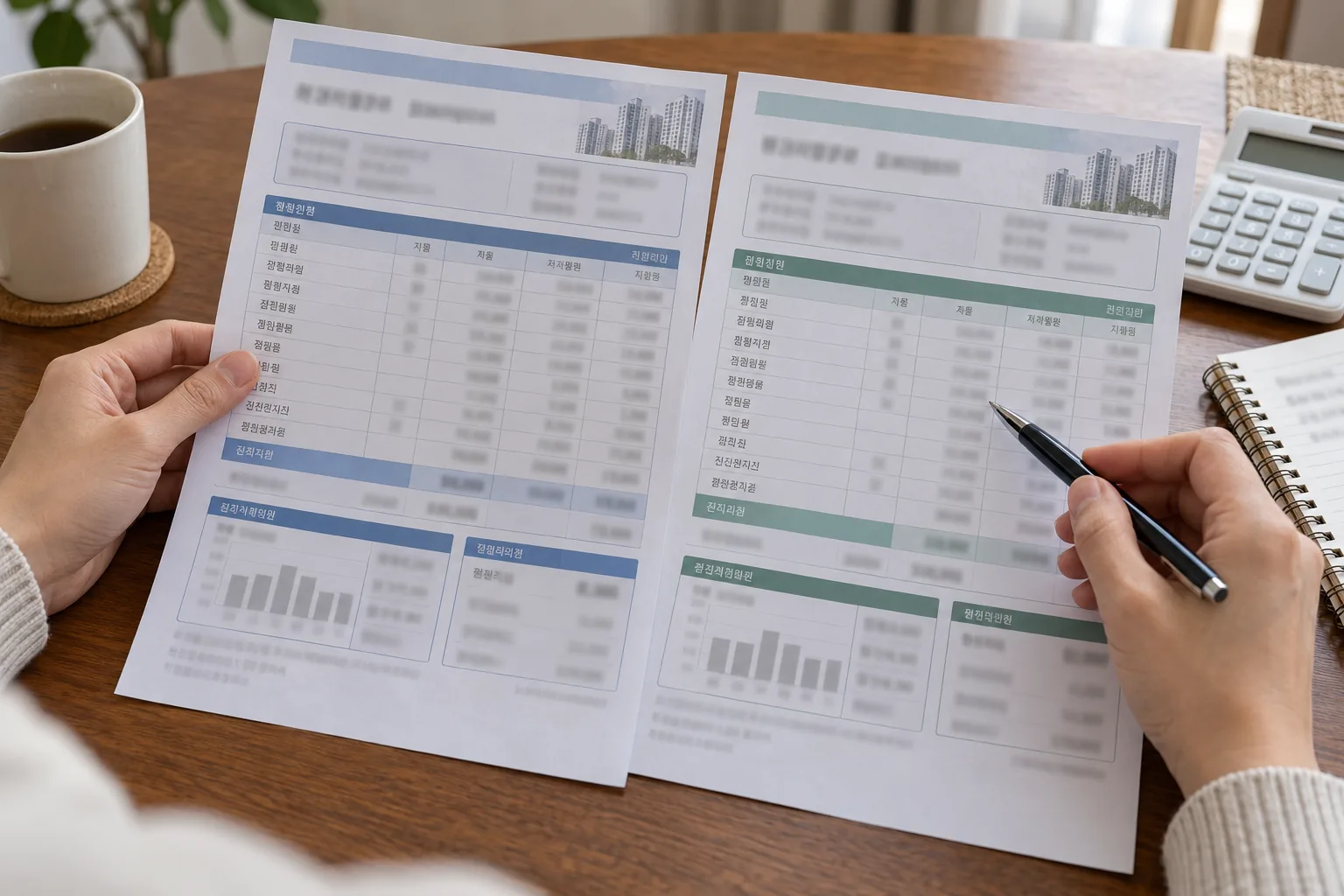
On a large apartment bill you may see 일반관리비 (general management), 청소비 (cleaning), 경비비 (security), 승강기유지비 (elevator maintenance), and 수선유지비 (repair and maintenance). These describe services for the building or common areas. You may also see 세대전기료 and 세대수도료, charges linked to your unit’s electricity and water use, alongside shared usage. Heating and hot water can have their own lines. The exact labels and calculation method vary by building.
Seoul’s official apartment charge category guide separates management costs, common-area services, individual-unit utilities, and reserve-related items. It is a classification reference, not your building’s invoice. The Seoul apartment management rules reference also describes itemized notices and separately showing long-term repair reserves in the applicable apartment context. Check the actual notice and rules for your property.
장기수선충당금 is a long-term repair reserve that can appear as a separate line. Its existence on a bill does not by itself answer whether a tenant ultimately bears that cost. The lease, applicable rules, and any settlement with the owner matter. Record the line and ask the management office or landlord for a written explanation before drawing a conclusion.
Investigate a sudden increase step by step
- Check the period and move-in date. A partial month, previous balance, or settlement may be shown separately. Do not assume every difference is consumption.
- Compare individual lines. Separate a change in electricity, water, heating, hot water, or common charges. A higher total alone does not identify the cause.
- Look for meter readings and adjustments. If the statement lists previous and current readings, compare them. Ask what an adjustment or arrears line represents.
- Ask for the calculation. Give the office the period, unit, line label, and amount. Keep a copy of the statement and response.
A simple example: if the total rises but only the heating line changes, ask how that line was measured and billed before treating it as a building-wide increase. This is an illustration of how to investigate, not a calculation of your own bill. If an amount is disputed near the deadline, ask the office what payment or objection process applies; avoid silently ignoring the notice.
Useful Korean questions
| Korean | English |
|---|---|
| 이 항목이 무엇인가요? | What is this item? |
| 이번 달 관리비가 왜 올랐나요? | Why is this month’s maintenance bill higher? |
| 세대별 사용량을 확인할 수 있나요? | Can I check my unit’s usage? |
| 납부기한이 언제인가요? | When is the payment deadline? |
| 집주인과 확인해야 할 항목인가요? | Is this an item I should confirm with the landlord? |
Start with the 관리사무소 (management office) for an explanation of the building’s calculation. For questions about the lease or who finally bears a charge, keep the contract and the written response together. Avoid sharing your full bill or account number in a public online post.
Categories checked against Seoul Metropolitan Government resources on September 30, 2026. This is a reading guide, not a determination of a particular resident’s legal or financial obligation. Rules and bill formats differ by building. All images are AI-generated illustrations.
고구마




Comments 댓글 0
Be the first to comment 첫 댓글을 남겨보세요.