
How to Use a Korean Kiosk (Fast Food & More)
I held out for years before putting a self-order kiosk in my own restaurant. I like taking orders face to face — it’s half the reason I got into this business. But eventually I gave in and installed one, and watching my own foreign customers approach it has been an education. The freeze is always the same: they get through the menu fine, then stall at one particular screen, unsure which button won’t trap them. Learning how to use a Korean kiosk really comes down to recognizing a handful of on-screen words, because these machines are now everywhere — fast food, 분식 spots, cafes, cinemas, even my little place in Mapo.
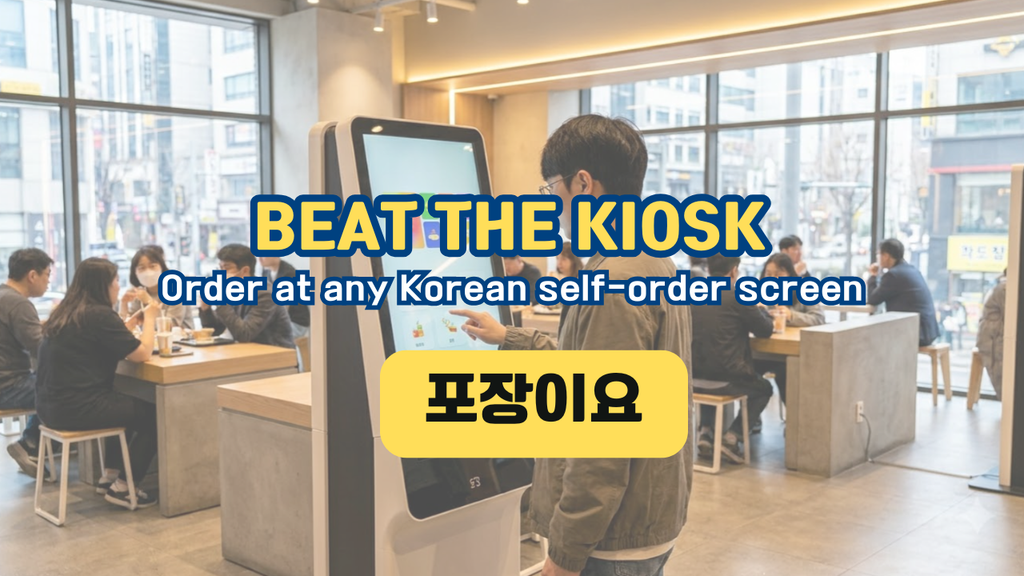
Where People Actually Freeze
Here’s the thing: the menu part is easy — you can see the food. The panic hits at the decision screens, where the buttons are words, not pictures. So let’s kill the fear right there. These are the on-screen words that matter most:
- 매장 (mae-jang) — dine-in (“for here”)
- 포장 (po-jang) — takeout (“to go”)
- 결제 (gyeol-je) — pay / checkout
- 추가 (chu-ga) — add (extra toppings, sides)
- 취소 (chwi-so) — cancel
- 주문 (ju-mun) — order
- 언어 (eon-eo) — language (look for this to switch to English)
That 매장 vs 포장 screen is the one that stops almost everyone at my counter. Now you know: 매장 to eat there, 포장 to take it away.
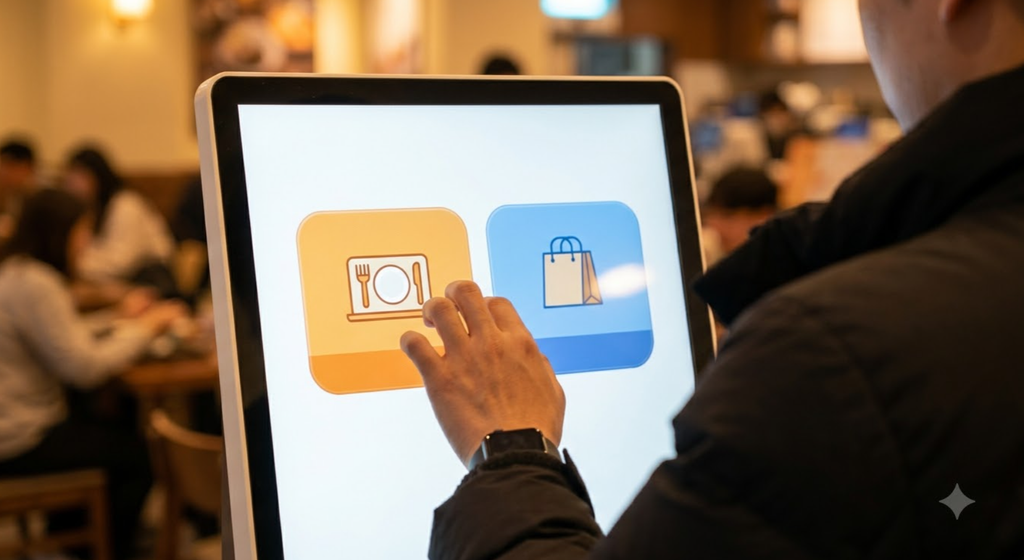
Step by Step at (Almost) Any Kiosk
The flow barely changes whether you’re at a Lotteria, a gimbap place, or a movie theater:
- Tap 언어 (language) if you want English — most modern kiosks have it tucked in a corner.
- Choose your items from the menu.
- Handle 추가 (add-ons) — this is where you’d add cheese, size up, or pick sides.
- Pick 매장 or 포장 — dine-in or takeout.
- Hit 결제 (pay) and tap your card. Many kiosks are card-only, no cash, so have a card ready.
- Take the receipt with your order number, and wait for it to be called or for your buzzer to go off.
That’s genuinely the whole thing. Five or six taps, and you’ve ordered without saying a word.
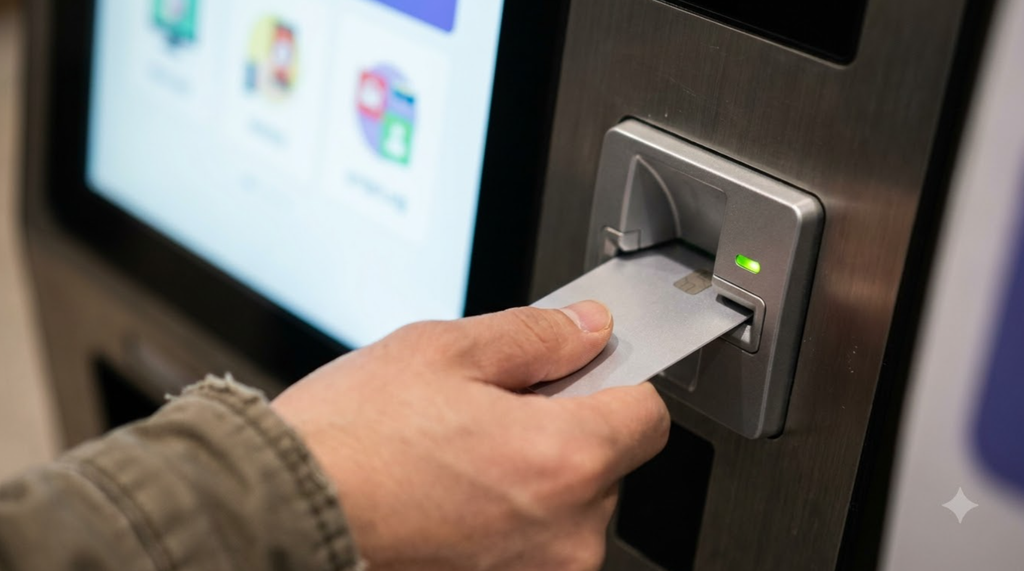
The Two Snags to Watch For
Card-only machines. A lot of kiosks don’t take cash at all. If you’re carrying only bills, you might get stuck at 결제 — keep a card on you.
The line behind you. Korean kiosks tend to be in fast-moving places, and there’s often someone waiting. Don’t let that rush you into a wrong tap. If you do fumble, 취소 (cancel) is right there, and honestly, no one minds — I watch people restart orders at mine all day. Take your time.
If a small, older restaurant’s kiosk is Korean-only with no language button, that’s when the words above earn their keep: 매장, 포장, 결제, and you’re through.
The Hidden Discount Buttons
Here’s something most visitors tap right past. Many kiosks — especially at the big fast-food chains — have a small step near the end for discounts and points, and it’s easy money left on the table.
- Look for a 할인 (hal-in, discount) or 쿠폰 (coupon) button before you pay. If you have a telecom membership (통신사 멤버십) through a Korean carrier, this is where it applies — the same discount trick that works at convenience stores.
- Some chains let you collect points (적립, jeok-rip) by entering a phone number or scanning a barcode. If you order at the same place often, it adds up.
You don’t need these to order — skip them if you’re just passing through — but if you’re settling in, it’s worth a glance before you hit 결제.
A Note for Cafe and Convenience-Store Overlap
You’ll notice the same logic runs through the cafe kiosks when you order coffee and even the self-checkout creeping into some convenience stores. Master the words once, and every screen in Korea gets easier — it’s the same 매장/포장/결제 vocabulary underneath.
The irony isn’t lost on me that I’m now the guy explaining the machine I resisted for a decade. But I’ve watched enough nervous first-timers turn into confident tappers to know the fear fades fast. Walk up to the next kiosk, find the 언어 button, and treat 매장/포장 as the only real decision — the rest is just pointing at food.
고구마

댓글 0
첫 댓글을 남겨보세요.