
How to Use a Coin Laundry in Korea (Wash & Dry Guide)
A Korean coin laundry is useful when your apartment washer is too small for bedding, you need a dryer, or you are traveling without laundry facilities. The first visit is easier if you decide three things before paying: which machine fits your load, whether detergent is supplied, and whether your clothes can go in a tumble dryer. Machines and payment methods vary by shop, so the instructions on the machine you choose take priority over any general guide.
Before you put clothes in a machine
Search for 셀프빨래방 (self-service laundromat) or 코인빨래방 (coin laundry) on a local map. Check the individual shop’s opening hours and payment options. The word “coin” in the name does not guarantee that every machine takes coins: some shops use a kiosk, a stored-value card, or an app. For example, WashEnjoy describes app-based payment through Wash&PAY; that is a feature of participating locations, not a rule for every laundromat. WashEnjoy’s payment announcement explains its own system.
Separate light and dark items if the care labels call for it, empty pockets, and close zippers. Check each item’s care label for machine washing and tumble drying. Put delicate, embellished, or dry-clean-only items aside rather than assuming that a large commercial machine is safe for them. LG’s dryer guidance specifically advises checking clothing labels before drying.
Washing: a first-visit sequence
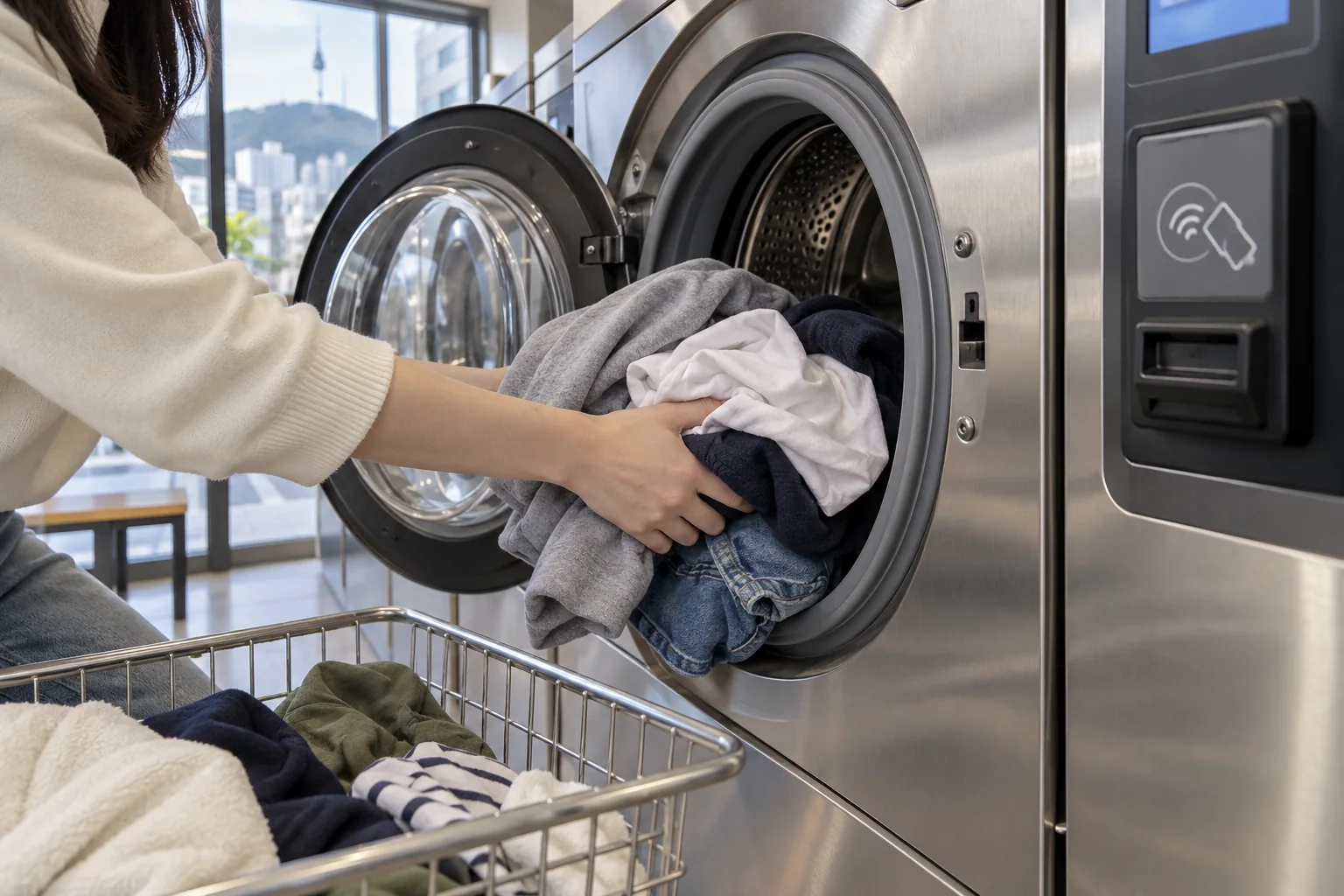
- Choose a washer. Look for 세탁기 (washer), then compare the posted load limit with your laundry. Leave enough room for the load to move; do not force a duvet into an undersized drum.
- Check the detergent notice. Look for 세제 자동투입 (automatic detergent dispensing) or 세제 별도 (detergent not supplied). WashEnjoy says its own machines automatically supply detergent and fabric softener, but that does not establish what another shop provides. See its course and detergent guide.
- Load and close the door. Check that the drum is empty of another customer’s items. Put in your laundry and shut the door fully.
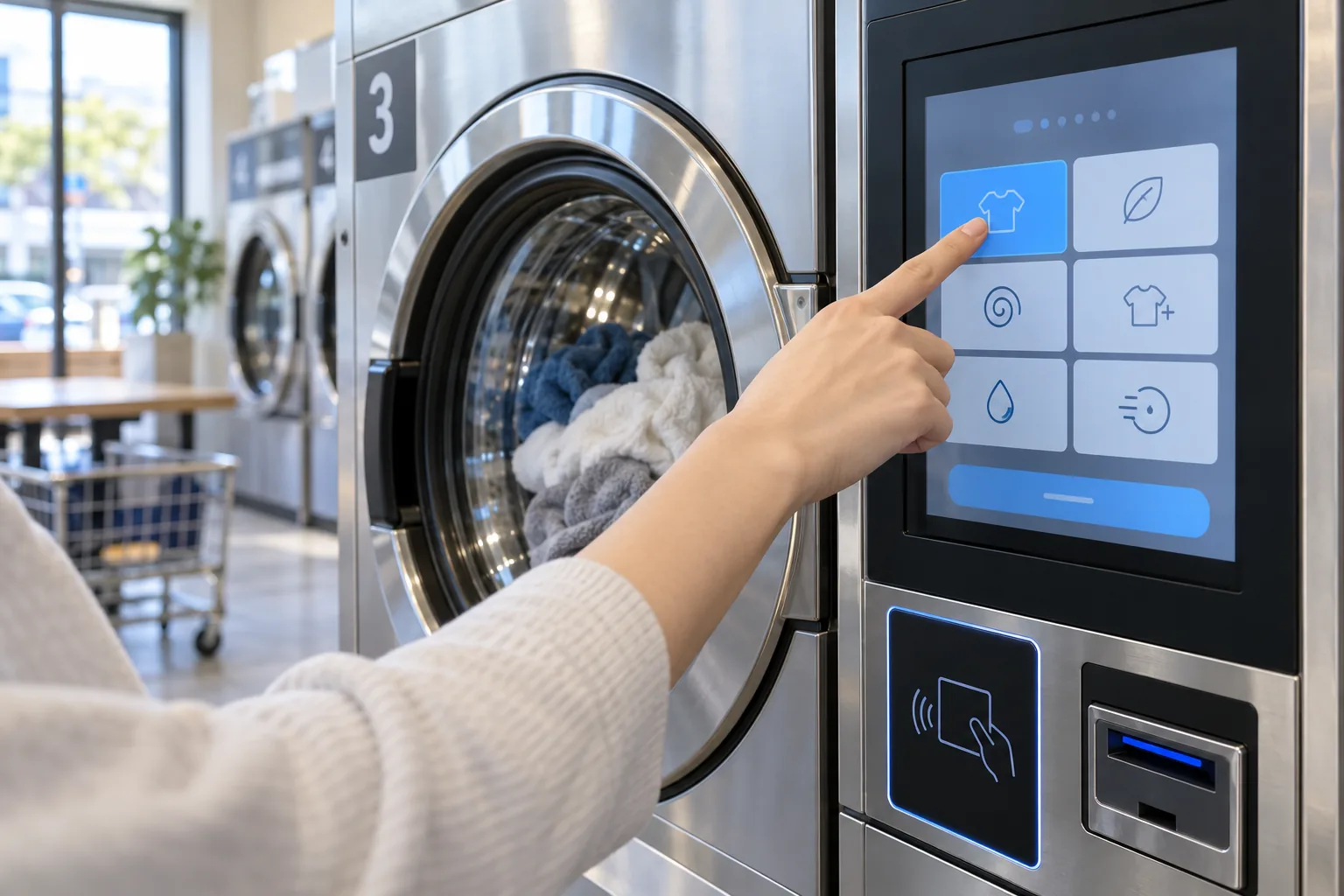
- Select the cycle and pay. Match the displayed machine number at a shared kiosk if the shop uses one. Select a suitable course according to the garment labels and on-site instructions, review the price shown before paying, and press 시작 (start) if required.
- Check that it is running. A paid machine should show a countdown or begin its cycle. If it does not, check the door, machine number, and payment confirmation before paying again. Use the shop’s posted support contact when needed.
Do not add your own detergent to an auto-dispensing machine unless that shop’s instructions allow it. Extra detergent can be unnecessary and may affect the wash.
Drying without damaging your clothes
When the wash ends, move items to a 건조기 (dryer) only if their care labels permit tumble drying. Check the dryer’s posted capacity and select a temperature appropriate for the fabric. Avoid assuming that the hottest setting is best: heat can shrink or damage some materials. LG also advises matching the drying cycle to the fabric care label in its cycle selection guide.
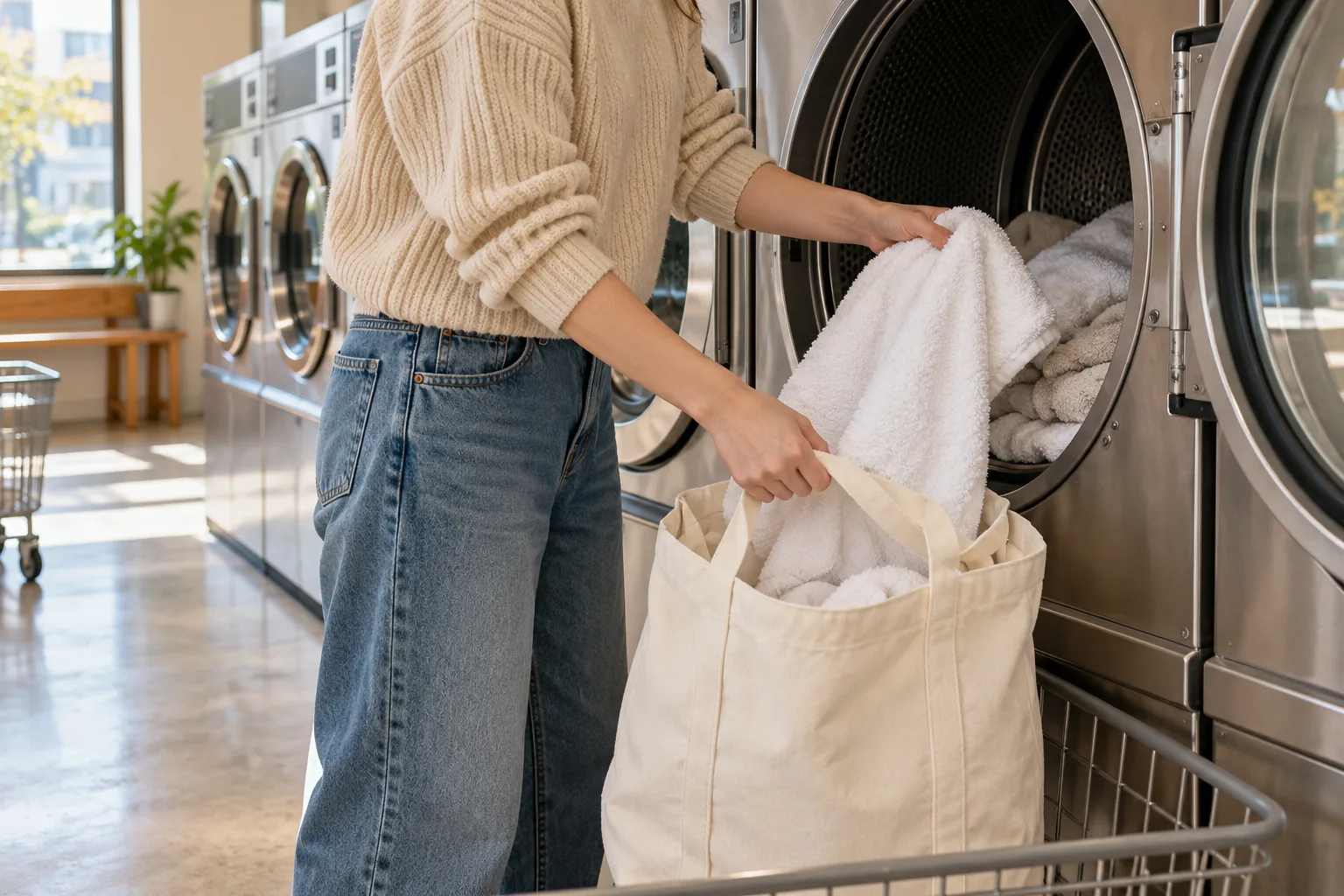
Some shops charge for drying separately or in time increments. Read the time and cost on the actual machine or kiosk, then pay and start it. Remove your clothes promptly after the cycle, check thick items for damp spots, and add time only if the fabric can safely be dried further. Take a bag so you can carry clean laundry home without putting it back into a basket used for dirty clothes.
Korean words to recognize on the machine
| Korean | Romanization | Meaning |
|---|---|---|
| 세탁 | setak | Wash |
| 건조 | geonjo | Dry |
| 세제 | seje | Detergent |
| 섬유유연제 | seomyu yuyeonje | Fabric softener |
| 표준 | pyojun | Standard cycle |
| 고온 / 저온 | goon / jeoon | High / low temperature |
| 시작 / 일시정지 | sijak / ilsijeongji | Start / pause |
| 사용 중 / 사용 가능 | sayong jung / sayong ganeung | In use / available |
If a screen is confusing, you can ask a nearby attendant, when one is present: 이 기계 어떻게 사용해요? — i gigye eotteoke sayonghaeyo? — “How do I use this machine?” At an unattended shop, look for the posted help number rather than interrupting another customer’s cycle.
Three mistakes that cost time
- Paying for the wrong machine: confirm the machine number on both the drum and kiosk before completing payment.
- Assuming detergent is included: read the notice first. Different chains and individual shops may equip their machines differently.
- Putting everything in a hot dryer: sort by care label, not by whether an item survived the wash.
If you are staying in Korea long term, the guide to sorting household waste covers another everyday task that varies by local instructions.
Quick questions
Do I need coins?
Not necessarily. Check the payment notice at the specific shop. Some machines accept other methods, including kiosks or an app.
Do I need to bring detergent?
It depends on the machine. Look for 세제 자동투입 before adding anything; some chains provide it automatically.
Can I dry a duvet?
Check the duvet’s care label and the dryer’s load limit. A large drum does not override a “do not tumble dry” instruction.
Information checked: September 29, 2026. Shop prices, machine controls, and payment options can change; follow the instructions posted at the location you use. Images in this guide are illustrative AI-generated scenes, not photographs of a specific business or machine.
고구마


Comments 댓글 0
Be the first to comment 첫 댓글을 남겨보세요.