
Korean Texting Slang: What ㅋㅋ, ㅎㅎ, and ㅇㅇ Mean
An acquaintance of mine who teaches Korean online once told me that the single question her foreign students ask most isn’t about grammar at all — it’s “why did my Korean friend just reply with a bunch of ㅋ’s, and should I be worried?” It always makes me laugh, because those little consonant clusters carry more social information than most textbooks ever cover. Learning Korean texting slang — especially ㅋㅋ, ㅎㅎ, and ㅇㅇ — is genuinely how you read the temperature of a chat here. The number of letters, the choice of consonant, even where you place them all shift the meaning. As a Korean who texts in these all day, let me decode the ones that matter.
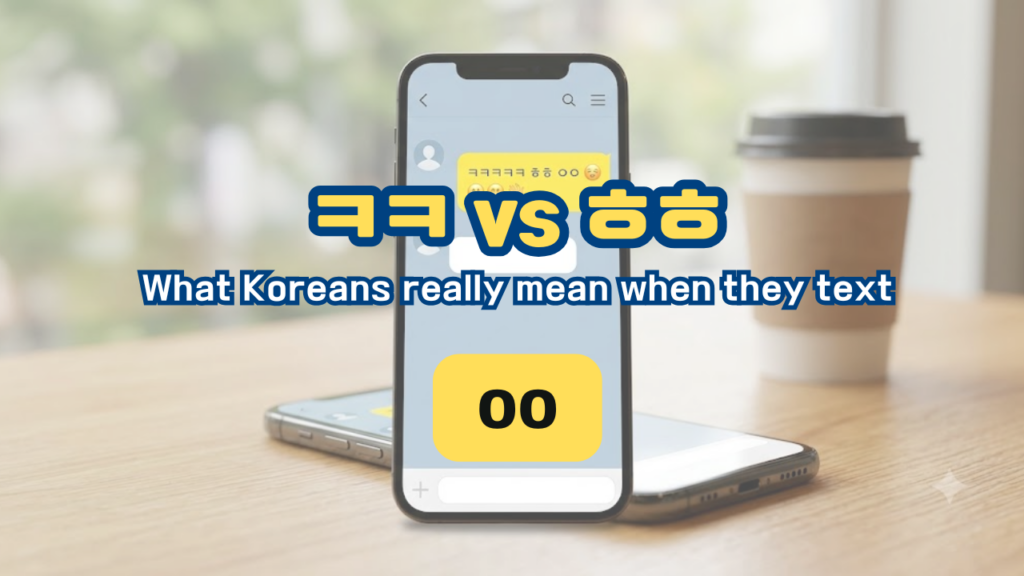
The Big Three: ㅋㅋ, ㅎㅎ, ㅇㅇ
Start with the three you’ll see constantly. They’re built from the first consonants of a sound, typed on their own as shorthand.
ㅋㅋ (k-k) is laughter — think “haha” or “lol.” It comes from the laughing sound 크크/키키. This is your all-purpose “that’s funny.”
ㅎㅎ (h-h) is a softer, gentler laugh or smile, from 하하/흐흐. It reads warmer and more polite than ㅋㅋ — less “that’s hilarious,” more “I’m smiling, we’re good.” Koreans often add it to sound friendly.
ㅇㅇ (eung-eung) means “yeah / yep,” from 응응. It’s a casual, quick “yes” or “okay.” Among close friends it’s perfectly normal, but — and this is important — it can feel a little curt if the relationship isn’t close.
Quantity Changes Everything
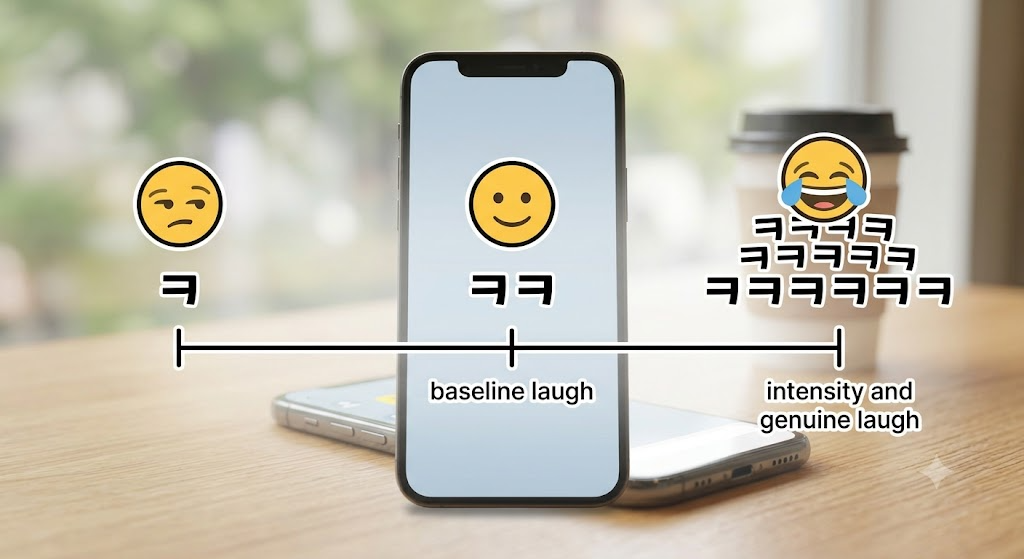
Here’s the rule that surprises everyone: the number of letters signals intensity. This is where a lot of foreign texters accidentally send the wrong vibe.
- ㅋ (just one) can read as dry, unimpressed, or even mildly sarcastic — like a flat “heh.” Sending a single ㅋ to someone’s genuine joke can feel cold.
- ㅋㅋ is the polite, neutral baseline — “haha, noted.”
- ㅋㅋㅋㅋㅋ means you actually laughed. The more ㅋ’s, the harder you’re laughing.
So if a friend sends you a funny message and you reply with one lonely “ㅋ,” you may come across as unamused even if you didn’t mean to. When in doubt, match their energy — which brings us to the vibe-matching skill later.
ㅎㅎ vs. ㅋㅋ: The Subtle Difference
These two aren’t interchangeable, and knowing when to use which is a real marker of fluency.
ㅋㅋ is playful and casual — great with friends and peers. ㅎㅎ is softer and safer — it adds warmth and politeness, which makes it the better choice with someone you don’t know well, a new acquaintance, or when you want to seem gentle rather than boisterous. If a coworker you’re still formal with says something mildly funny, ㅎㅎ is the graceful reply; a barrage of ㅋㅋㅋㅋ might feel too familiar. I tend to reach for ㅎㅎ when I want to be kind and ㅋㅋ when I’m genuinely goofing around.
Why ㅇㅇ Can Feel Cold
ㅇㅇ deserves its own warning. It’s efficient and totally normal between close friends, but because it’s so short, it can land as blunt or even annoyed with people you’re not tight with. If your Korean coworker asks a thoughtful question and you fire back “ㅇㅇ,” it may read as dismissive.
Softer alternatives when you want warmth: ㅇㅋ (okay), or just spelling out 응 with a friendly ending, or adding ㅎㅎ to take the edge off — “ㅇㅇ ㅎㅎ” instantly feels warmer than a bare “ㅇㅇ.” This is the same face-saving, harmony-minded instinct behind how Koreans soften a refusal — even a “yes” gets cushioned.
Other Consonant Slang You’ll See
A few more you’ll run into constantly:
- ㅇㅋ — “okay” (from 오케이)
- ㄴㄴ — “no no” (from 노노)
- ㄱㄱ — “go go / let’s go” (from 고고)
- ㅠㅠ / ㅜㅜ — crying eyes; sadness, disappointment, or “aww”
- ㅂㅂ — “bye bye”
- ㄱㅅ — “thanks” (from 감사)
- ㅊㅋ — “congrats” (from 축하)
These work like emoji: quick, tonal, and casual. Sprinkle them in and your texts instantly feel more natural.
A Big Caution: Formality
Here’s a mistake worth avoiding. This consonant slang is casual — for friends and peers only. Do not send ㅇㅇ, ㅋㅋ, or ㄱㅅ to a professor, a boss, or an older person you should be respectful toward. In those chats, spell things out properly: 네 (yes), 감사합니다 (thank you), full sentences. Firing “ㅇㅇ” at your manager reads as disrespectful in a way that’s hard to walk back. Match the slang to the relationship.
How to Match the Vibe
The real skill isn’t memorizing meanings — it’s mirroring. Koreans read closeness partly through whether your texting energy matches theirs.
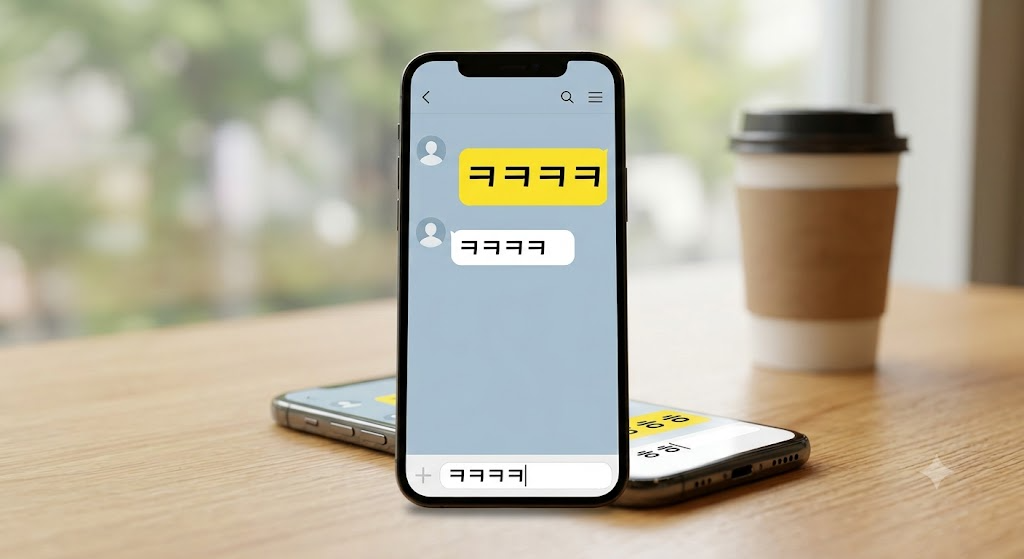
- If they send ㅋㅋㅋㅋ, don’t reply with a flat ㅋ — match with a few ㅋ’s.
- If they’re warm and gentle with ㅎㅎ, meeting them with ㅎㅎ keeps the tone in sync.
- As you get closer, you’ll naturally shift from polite ㅎㅎ toward playful ㅋㅋ and eventually breezy ㅇㅇ — that drift is the friendship deepening.
Watching how a chat’s consonant style evolves is honestly one of the clearest signals of where a relationship stands.
FAQ
What does ㅋㅋ mean in Korean texting?
It’s laughter — like “haha” or “lol.” More ㅋ’s mean harder laughing; a single ㅋ can feel dry or unimpressed.
Is ㅇㅇ rude?
Not among close friends, where it’s normal. But it can feel curt with people you’re not close to — soften it with ㅎㅎ or spell out your reply.
What’s the difference between ㅋㅋ and ㅎㅎ?
ㅋㅋ is playful and casual; ㅎㅎ is softer, warmer, and more polite. Use ㅎㅎ when you want to seem gentle or you’re not yet close.
Can I use this slang with my boss or professor?
No — keep it to friends and peers. With elders or superiors, use full, polite words like 네 and 감사합니다.
The Bottom Line
Once you can read Korean texting slang — the warmth of ㅎㅎ, the laughter scale of ㅋㅋ, the curtness risk of ㅇㅇ — you’ll text like someone who actually lives here, and you’ll stop misreading a chat’s temperature. Match your friend’s energy, save the slang for peers, and let your style loosen as the friendship grows. It sits right alongside knowing how Koreans say no without saying it and what “let’s eat sometime” really means — all three are about reading the unspoken layer of Korean communication. That teacher’s students eventually stopped worrying about the ㅋ’s. After this, so will you.
고구마





댓글 0
첫 댓글을 남겨보세요.