
Food Allergies in Korean Restaurants: Questions to Ask Before Ordering
If an ingredient can cause a serious allergic reaction, “Please leave it out” is not enough. The dish may already contain it in broth, sauce, garnish or a prepared component, and shared equipment can create cross-contact. Tell staff the specific allergen before ordering and ask whether they can confirm both ingredients and preparation. If they cannot, choose another dish or restaurant.
Say the ingredient and consequence clearly
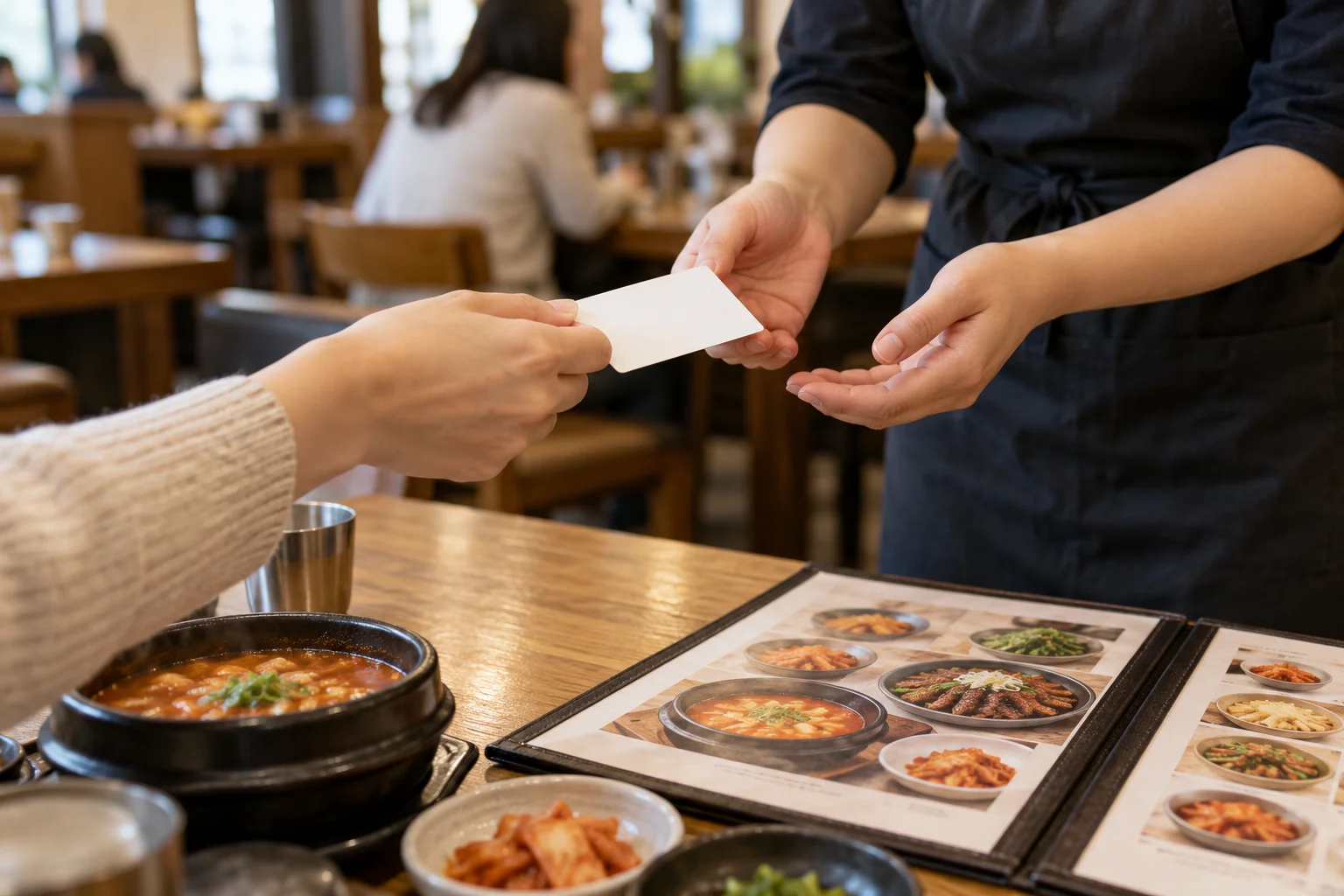
Prepare a short card in Korean and English naming your exact allergen, not a broad category guessed by translation software. For example: “저는 땅콩 알레르기가 있습니다. 땅콩이나 땅콩 성분이 들어가나요?” (“I have a peanut allergy. Does it contain peanuts or peanut ingredients?”). For another allergen, replace 땅콩 only after checking the Korean term with a reliable dictionary or a fluent speaker. Ask about shared cooking tools and surfaces as well as the ingredient itself.
Explain the severity accurately. A preference or intolerance should not be described as anaphylaxis, and a severe allergy should not be downplayed as a preference. Show the card to a staff member who can check with the kitchen rather than relying on a guess at the table.
Where hidden ingredients may enter
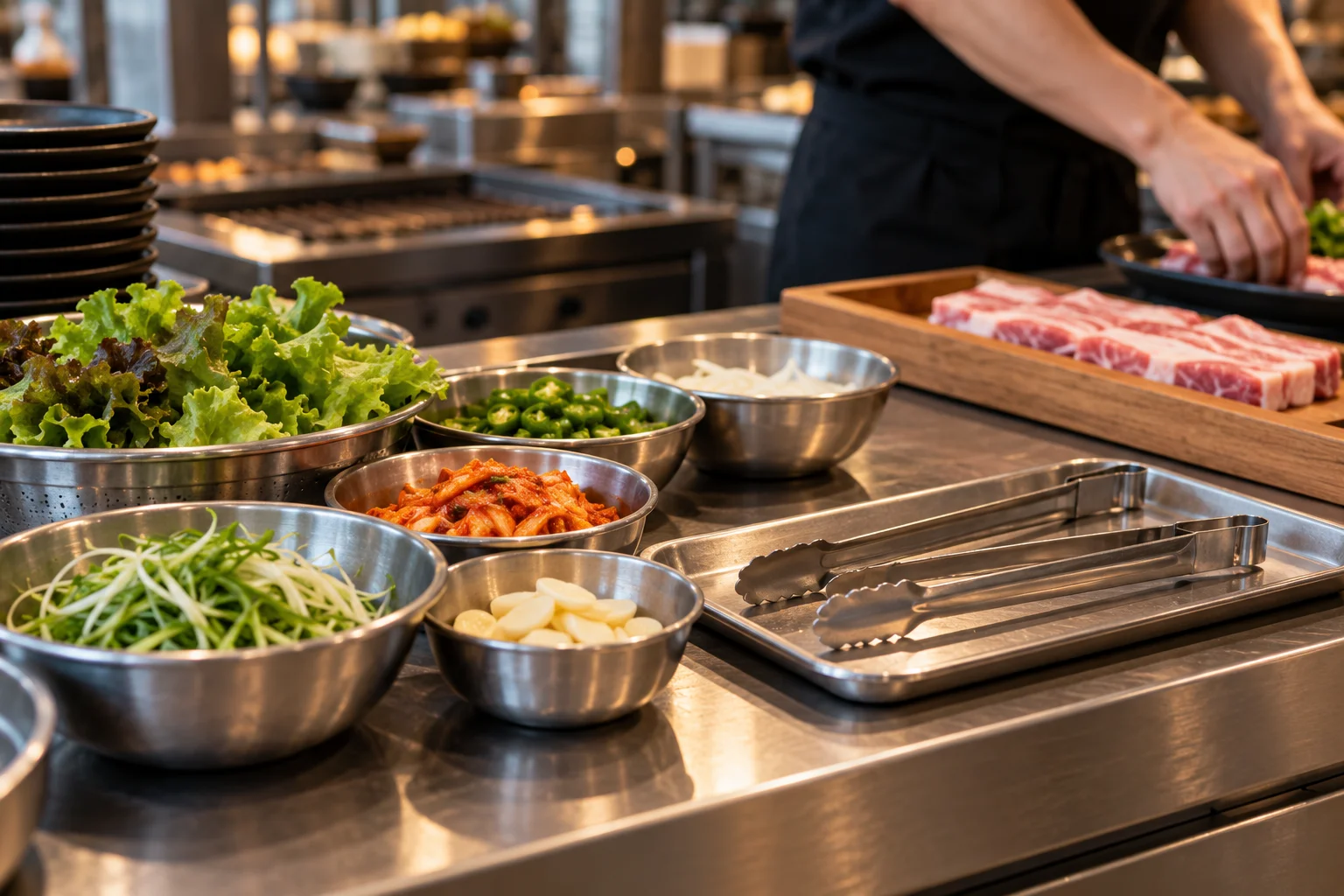
Ask about the broth, sauce, marinade, side dishes and toppings separately. A dish name alone does not disclose its complete recipe. In a restaurant, ask whether the ingredient is used anywhere in the dish and whether cooking surfaces, oil or utensils are shared. “No visible peanuts” does not establish that peanut ingredients or cross-contact are absent.
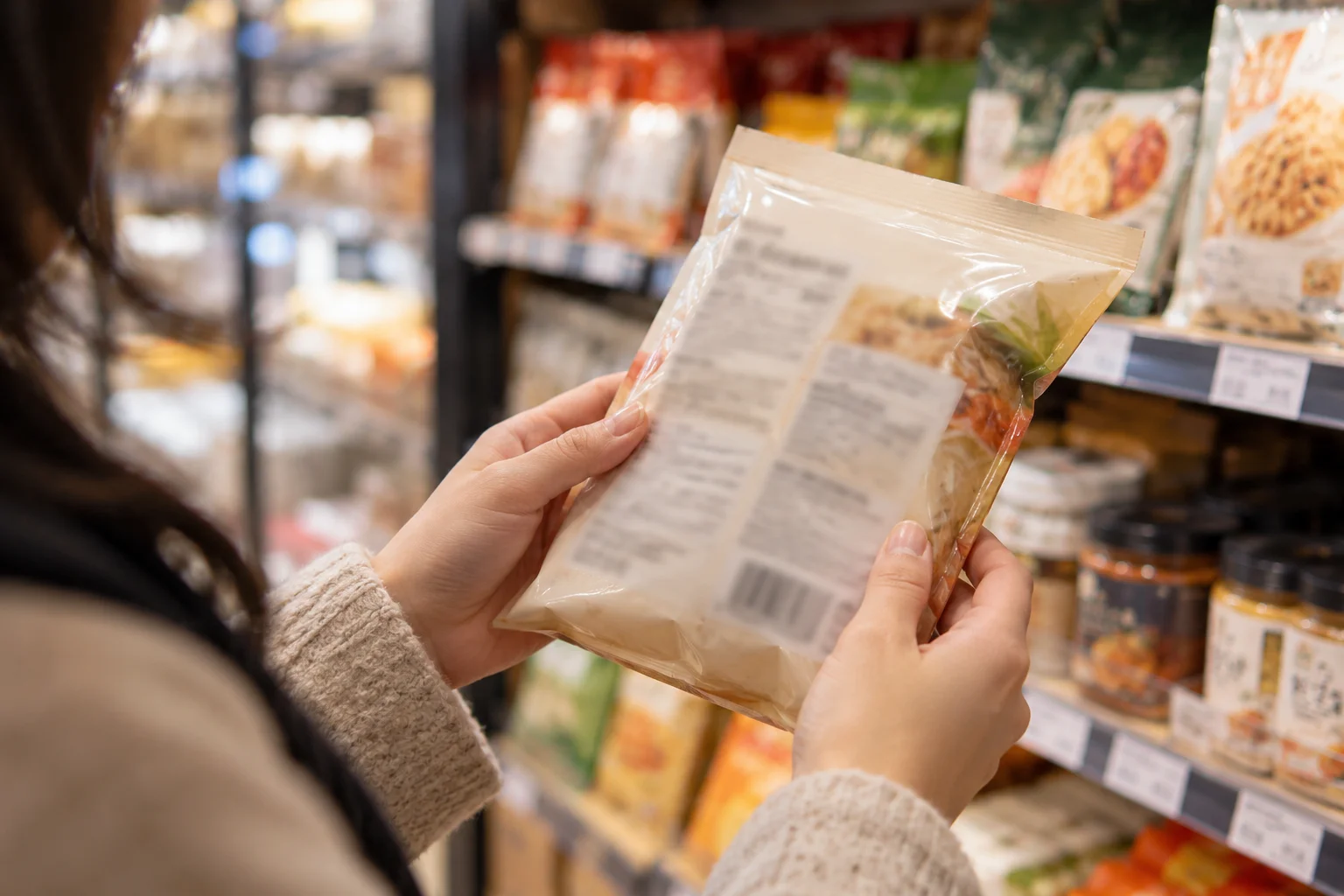
Korea’s Ministry of Food and Drug Safety explains allergen labeling for packaged foods, including ingredient and possible mixing warnings. That source is useful when buying a sealed product, but a packaged-food label is not a guarantee about a restaurant’s fresh dish. Read the actual package every time; recipes and labels can change.
How to decide at the table
- Name the exact allergen and show a reviewed translated card.
- Ask staff to check all components, not just the main ingredient.
- Ask about shared equipment when relevant to your allergy.
- If staff cannot verify the answer, do not order that dish.
- Follow your clinician’s personal emergency plan and carry prescribed medication as directed. For an emergency in Korea, call 119.
Useful questions include “이 음식에 [ingredient]이/가 들어가나요?” (“Does this food contain [ingredient]?”) and “확인해 주실 수 있나요?” (“Could you check?”). Korean particles change with the final sound of the ingredient; a reviewed allergy card is safer than improvising a sentence under pressure. Restaurant staff may not know every supplier or cross-contact detail. An uncertain answer is a reason to choose a safer option, not a reason to take a chance.
Source check: September 30, 2026. MFDS packaged-food guidance linked above. This is a communication checklist, not personalized medical advice or a guarantee that a restaurant is allergen-free.
A phrase card is a conversation starter
저는 땅콩 알레르기가 있습니다.
Jeoneun ttangkong allereugiga itseumnida.
I have a peanut allergy.
확인해 주실 수 있나요?
Hwaginhae jusil su innayo?
Could you check?
Keep the written Korean available to show staff. These two examples do not describe every allergen or a personal treatment plan. Do not replace an ingredient name until the exact term is checked.
FARE’s dining-out guidance and cross-contact guidance support discussing ingredients and preparation with restaurant staff. Removing an ingredient from a finished dish does not establish that the dish is safe. A restaurant’s uncertain answer cannot be converted into reassurance by a translation app.
Our Korean menu guide can help identify dish names, but it cannot identify every ingredient or confirm allergy safety.
Common questions
Does removing an allergen from a finished dish make it safe?
No. Ingredients can remain in sauces or prepared components, and shared equipment can cause cross-contact. Ask the kitchen about ingredients and preparation before ordering.
Can a Korean menu name confirm allergy safety?
No. A dish name does not list every ingredient. Show your exact allergen in writing and ask staff to check; do not order the dish if they cannot verify the answer.
고구마


Comments 댓글 0
Be the first to comment 첫 댓글을 남겨보세요.