
How to Rent an Apartment in Korea as a Foreigner
Nothing about settling in Korea surprises newcomers more than the rental deposit system. In most countries you sign a lease with a month’s deposit and you’re done; here, an agent will casually mention a deposit of several million won, and I’ve watched more than one foreigner’s jaw hit the floor. Once you understand the logic, though, it’s completely manageable. Learning renting an apartment in Korea — the deposit, the monthly fees, and how to stay safe — is essential for anyone settling in. As a Seoul local who’s helped friends and staff find places, let me demystify it.
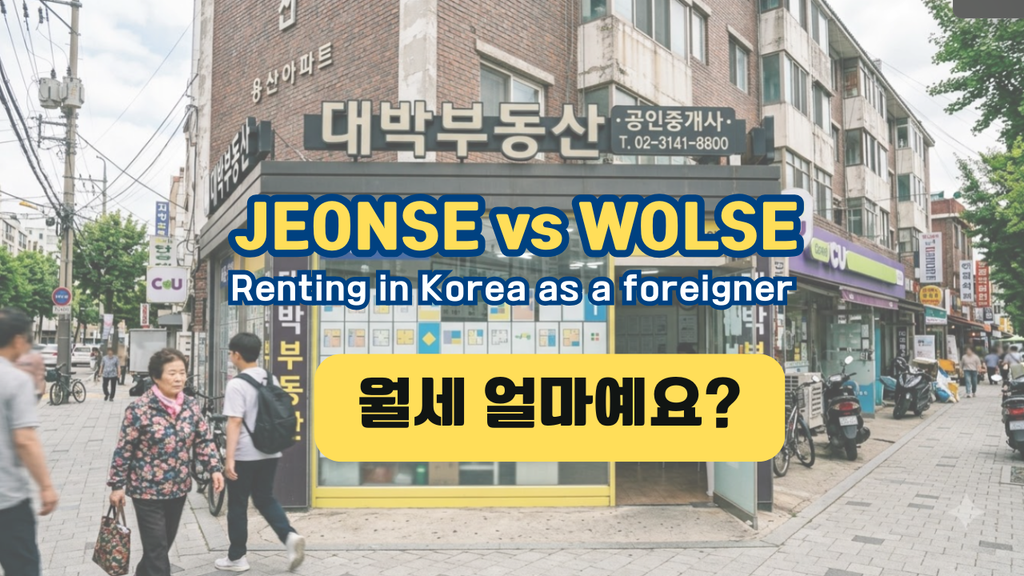
The Two Systems: Jeonse vs. Wolse
Korea has two rental models, and knowing the difference is step one.
- 전세 (jeonse): You pay one enormous lump-sum deposit — often a huge percentage of the property’s value — and pay no monthly rent at all. At the end of the lease, you get the whole deposit back. The landlord earns from investing your money.
- 월세 (wolse): A smaller deposit (보증금) plus monthly rent. This is what most foreigners use, since 전세 requires enormous cash upfront.
With 월세, there’s often flexibility: a higher deposit lowers your monthly rent, and vice versa. You can sometimes negotiate the balance to fit your cash situation.
Don’t Forget the Maintenance Fee (관리비)
Here’s the cost that catches everyone off guard: on top of rent, most buildings charge a monthly maintenance fee (관리비, gwan-li-bi). It covers things like cleaning, elevator upkeep, security, and sometimes water or internet. It can add a meaningful amount to your monthly total, so always ask whether it’s included and what it covers before you sign. Budgeting rent alone is a classic newcomer mistake.
Where Foreigners Usually Live
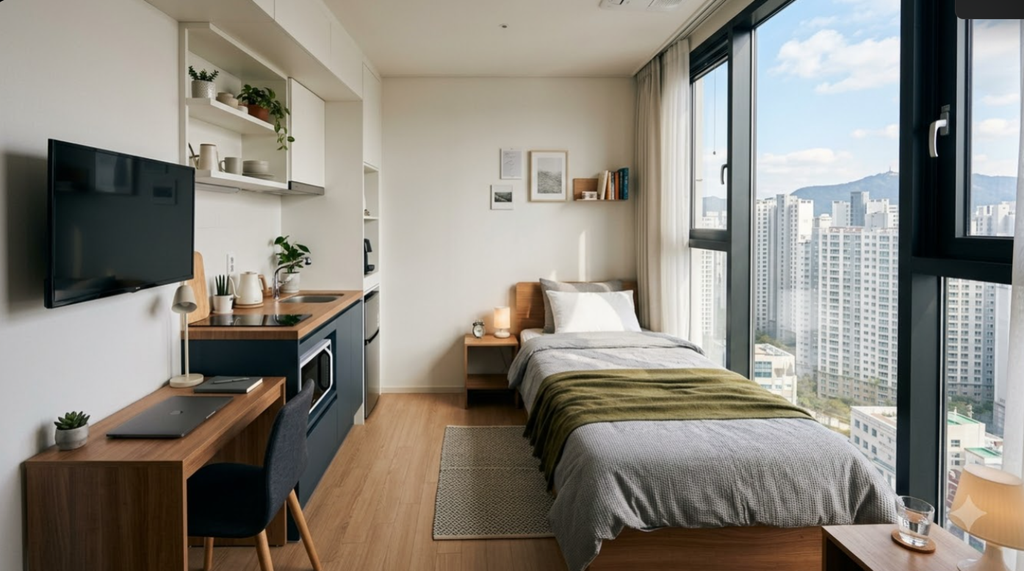
- 원룸 (one-room): A studio — one room with a small kitchen and bathroom. The typical starter place.
- 오피스텔 (officetel): A studio-apartment hybrid, often newer with better facilities and security, usually pricier.
- 고시원 (gosiwon): A tiny, cheap room, good for very short stays or tight budgets.
You’ll find these through a real estate agent (부동산, bu-dong-san) — a licensed office that shows you listings. The agent charges a regulated commission (중개수수료) on top of your deposit, so factor that in.
Before You Sign: Deposit Safety (Important)
This part is serious, so I’ll be direct. Deposit scams — where a tenant can’t get their large deposit back — are a real risk in Korea, and they’ve made headlines. Protect yourself:
- Verify the landlord actually owns the property. The agent can show the official property register (등기부등본); confirm the person signing is the real owner and check for existing loans against the property.
- Consider deposit-protection insurance (전세보증보험) for larger deposits.
- After moving in, register your residence (전입신고) and get a fixed date (확정일자) at the local community center — these legal steps help protect your deposit’s priority.
I’m not a lawyer, and this is general guidance — for a large deposit, it’s genuinely worth having someone knowledgeable review the contract. Don’t rush this step.

The Phrases for the Agent
At the 부동산, these carry you through — Korean, pronunciation, meaning:
- I came to look at a one-room → 원룸 보러 왔어요 (won-rum bo-reo wa-sseo-yo)
- How much is the monthly rent? → 월세 얼마예요? (wol-se eol-ma-ye-yo?)
- How much is the deposit? → 보증금 얼마예요? (bo-jeung-geum eol-ma-ye-yo?)
- Is the maintenance fee included? → 관리비 포함이에요? (gwan-li-bi po-ham-i-e-yo?)
- When can I move in? → 언제 입주 가능해요? (eon-je ip-ju ga-neung-hae-yo?)
The most important of these is “관리비 포함이에요?” — it reveals your true monthly cost, not just the headline rent.
FAQ
What’s the difference between jeonse and wolse?
Jeonse is one huge deposit with no monthly rent (returned at lease end); wolse is a smaller deposit plus monthly rent. Most foreigners choose wolse.
What is the 관리비?
A monthly maintenance fee for the building — cleaning, elevator, security, sometimes utilities. Always ask if it’s included, since it adds to your real monthly cost.
How do I avoid a deposit scam?
Verify the landlord owns the property via the official register, consider deposit-protection insurance, and register your move-in (전입신고) with a fixed date. For a big deposit, have the contract reviewed.
Do I need an ARC to rent?
It helps a lot — many landlords and agents prefer tenants with an Alien Registration Card, and you’ll need it for the move-in registration that protects your deposit.
The Bottom Line
Once you understand renting an apartment in Korea — jeonse vs. wolse, the deposit-and-rent balance, the sneaky 관리비, and the safety steps before signing — the housing hunt stops being scary. Always ask “관리비 포함이에요?”, verify ownership before you hand over a deposit, and register your move-in. It connects directly to having a Korean bank account to pay rent from and mastering the daily-life systems like trash sorting once you’re in. After this, you’ll sign your lease with confidence.
고구마



댓글 0
첫 댓글을 남겨보세요.