
Korean BBQ Restaurant Guide: Change the Grill & More
The first time I took my friend Marcus to a proper 고깃집 (gogitjip — Korean BBQ spot), he sat there politely grilling his pork belly on a grill plate that had gone completely black and bitter, because he didn’t know the single most useful phrase in the room: “please change the grill.” When I called the staff over and a fresh, clean plate appeared thirty seconds later, he looked genuinely betrayed that no one had told him sooner. That’s exactly why this Korean BBQ restaurant guide exists. The food is incredible, but the table service has its own rhythm — and once you know a handful of phrases, you’ll grill like you’ve been doing it your whole life. As a Korean who has hosted more BBQ nights than I can count, let me walk you through it.
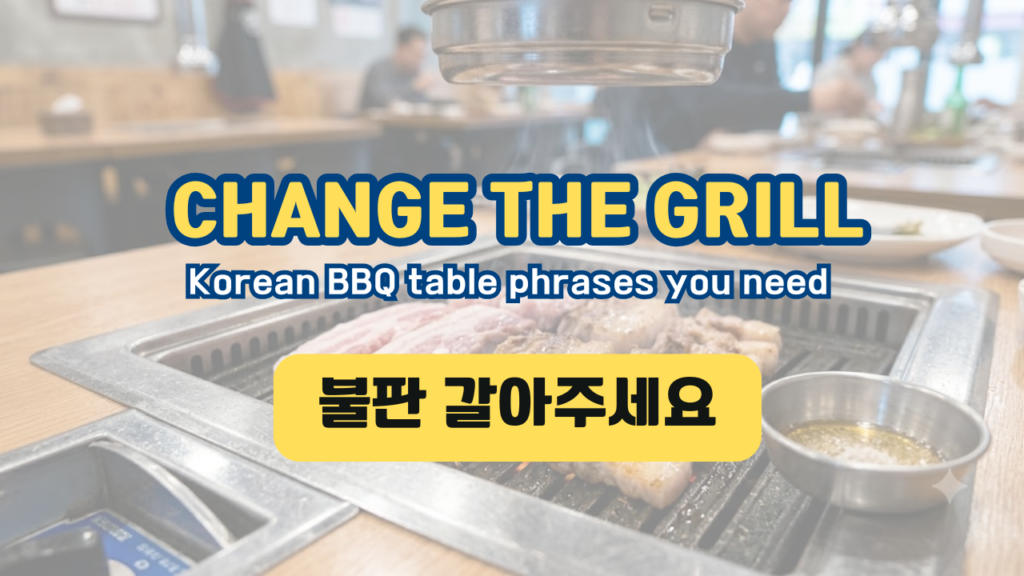
How a Korean BBQ Table Actually Works
Before the phrases, understand the setup, because it’s different from a restaurant where food just arrives finished.
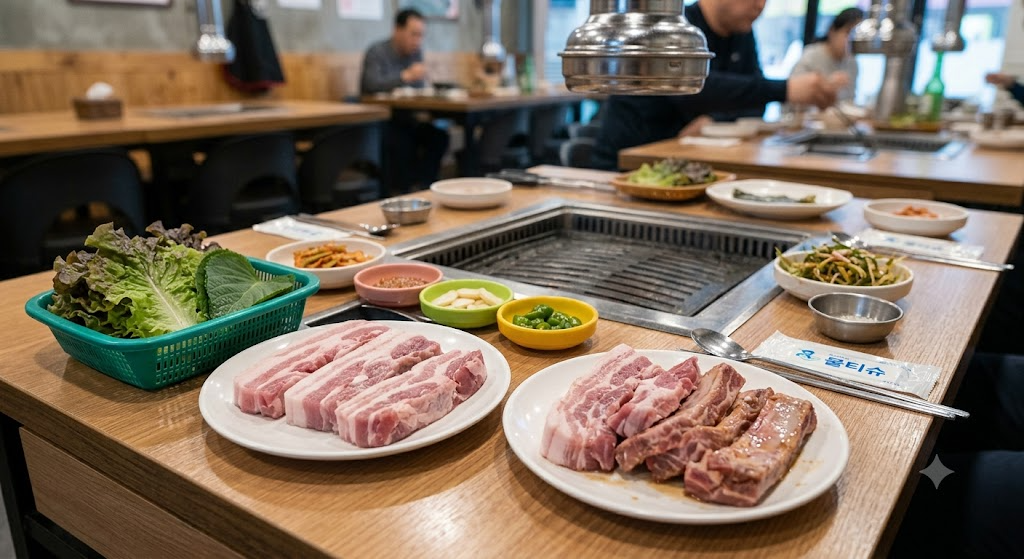
At a Korean BBQ restaurant, there’s a grill (불판, bulpan) built into your table, usually with a ventilation hood above it. You order raw meat by the serving, and it cooks right there. Sometimes the staff grill and cut everything for you; sometimes you do it yourself; often it’s a mix. Either way, you’re an active participant, and the staff come by regularly to help flip, cut, and — crucially — swap out the grill when it chars.
Everything on the table works as a team effort, which means asking for things is completely expected. Marcus’s mistake was treating it like a passive meal instead of the hands-on, ask-for-what-you-need experience it is.
The Most Important Move: Changing the Grill
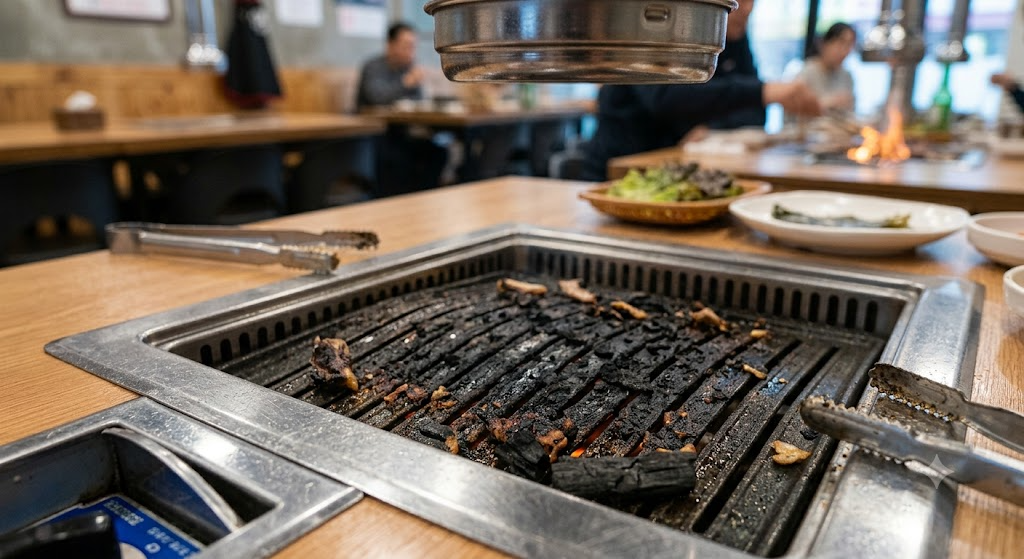
As you cook, the grill plate builds up burnt bits and starts scorching your meat. The fix locals use constantly is to ask for a fresh one:
- Please change the grill → 불판 갈아주세요 (bul-pan ga-ra-ju-se-yo)
Say it the moment things start looking black, and staff will bring a clean plate without a second thought. This one phrase alone will noticeably improve your meal — no more bitter, over-charred bites. It’s not a special request; it’s standard, and good staff often swap it before you even ask.
Phrases for Aprons, Wipes, and Tools
Korean BBQ is a little messy, and the table is stocked to handle it — you just have to ask.
- Can I get an apron? → 앞치마 주세요 (ap-chi-ma ju-se-yo)
- Wet wipes, please → 물티슈 주세요 (mul-ti-syu ju-se-yo)
- Scissors, please → 가위 주세요 (ga-wi ju-se-yo)
- Tongs, please → 집게 주세요 (jip-ge ju-se-yo)
- Can you cut the meat? → 고기 잘라주세요 (go-gi jal-la-ju-se-yo)
That apron phrase is a lifesaver if you’re wearing anything you care about — oil splatter is real. And yes, in Korea meat is cut with scissors (가위) right on the grill; if you’d like the staff to do the cutting, “고기 잘라주세요” does the trick.
How to Call the Staff
Same as any Korean restaurant, you get attention by calling out — and it’s polite here, not rude:
- Excuse me! → 여기요! (yeo-gi-yo!)
There’s also a warmer, very local option. At casual BBQ places, it’s common and friendly to address an older female server as 이모 (imo, “auntie”) or the owner as 사장님 (sa-jang-nim, “boss”). Calling out “이모, 여기요!” instantly makes you sound like a regular. Marcus was too shy for it at first, but by the end of the night he was cheerfully flagging down 이모 for more grill swaps.
Ordering Meat by the Serving
Meat is ordered by the serving (인분, in-bun), and many places have a two-serving minimum. The pattern is simple: meat name + number + 인분.
- Two servings of pork belly → 삼겹살 2인분 주세요 (sam-gyeop-sal i-in-bun ju-se-yo)
- Two servings of marinated ribs → 갈비 2인분 주세요 (gal-bi i-in-bun ju-se-yo)
And the wraps and sides — lettuce (상추), ssamjang, garlic — are refillable, just like banchan. If you run low:
- More lettuce, please → 상추 좀 더 주세요 (sang-chu jom deo ju-se-yo)
A Real BBQ Table Moment
Here’s how a stretch of the meal actually sounds:
You: 이모, 여기요! (Auntie, excuse me!)
Staff: 네~ (Yes~)
You: 불판 갈아주세요. 그리고 삼겹살 2인분 더 주세요. (Please change the grill. And two more servings of pork belly.)
Staff: 네, 갈아드릴게요! (Sure, I’ll change it!)
Clean grill, more meat, zero awkwardness. And as everywhere in Korea, there’s no tipping — you just pay the total at the counter on the way out.
A Note on Etiquette
Two small things elevate you from tourist to gracious guest. First, if you’re drinking, Korean pouring custom is to pour for others, not yourself, and to receive a drink with two hands from someone older — a lovely little ritual worth mimicking. Second, be reasonable with refills of lettuce and sides; take what you’ll eat. Koreans are generous with BBQ but mindful of waste.
FAQ
Can I really ask them to change the grill?
Absolutely — “불판 갈아주세요” is one of the most common requests at any Korean BBQ restaurant. Ask whenever it chars.
Do I grill the meat myself?
It varies. Sometimes staff do it, sometimes you do, often it’s shared. Watching once and asking “고기 잘라주세요” if you want help covers you.
What does 인분 mean?
It means “serving.” Meat is ordered by the serving (2인분 = two servings), and many places require a minimum of two.
Is it okay to call the server “이모”?
Yes — at casual spots, addressing an older female server as 이모 (auntie) is friendly and normal. “여기요!” always works too.
The Bottom Line
Once you can say “불판 갈아주세요,” ask for an apron, order by the 인분, and flag down 이모 without hesitation, a Korean BBQ restaurant goes from intimidating to one of the best nights out you’ll have here. Keep the grill clean, refill your lettuce, and pour for your friends. It pairs perfectly with knowing how banchan refills work and how to split the bill afterward — because BBQ is almost always shared. Marcus now runs the grill like a pro and calls for a fresh plate before it even chars. After this, so will you.
고구마


댓글 0
첫 댓글을 남겨보세요.