
What to Say When Staff Greet You in a Korean Shop
You walk into a Korean shop and hear “어서 오세요!” from the counter. You do not need to deliver a long reply. A small bow, a smile, or “안녕하세요” is enough. The more useful phrases come when staff ask whether you need help and when you leave.
Entering and browsing
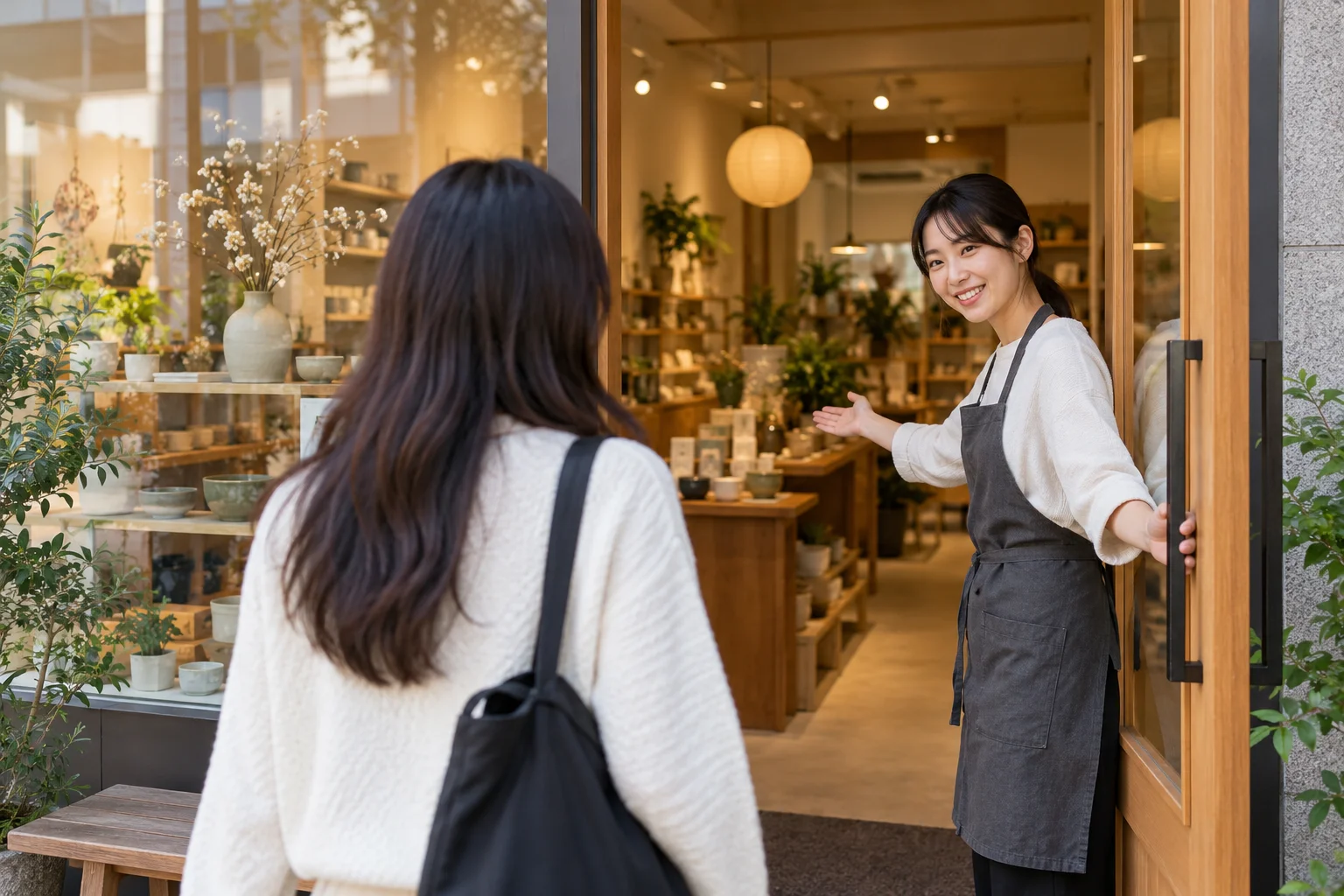
어서 오세요 is a welcome from the shop. Respond with 안녕하세요 if you want to speak, or acknowledge it politely without stopping. If staff ask “찾으시는 거 있으세요?” (“Are you looking for something?”), say “그냥 둘러보고 있어요. 감사합니다.” (“I’m just looking around, thank you”) if you want to browse. You can ask for help later.
Ask for a product or size
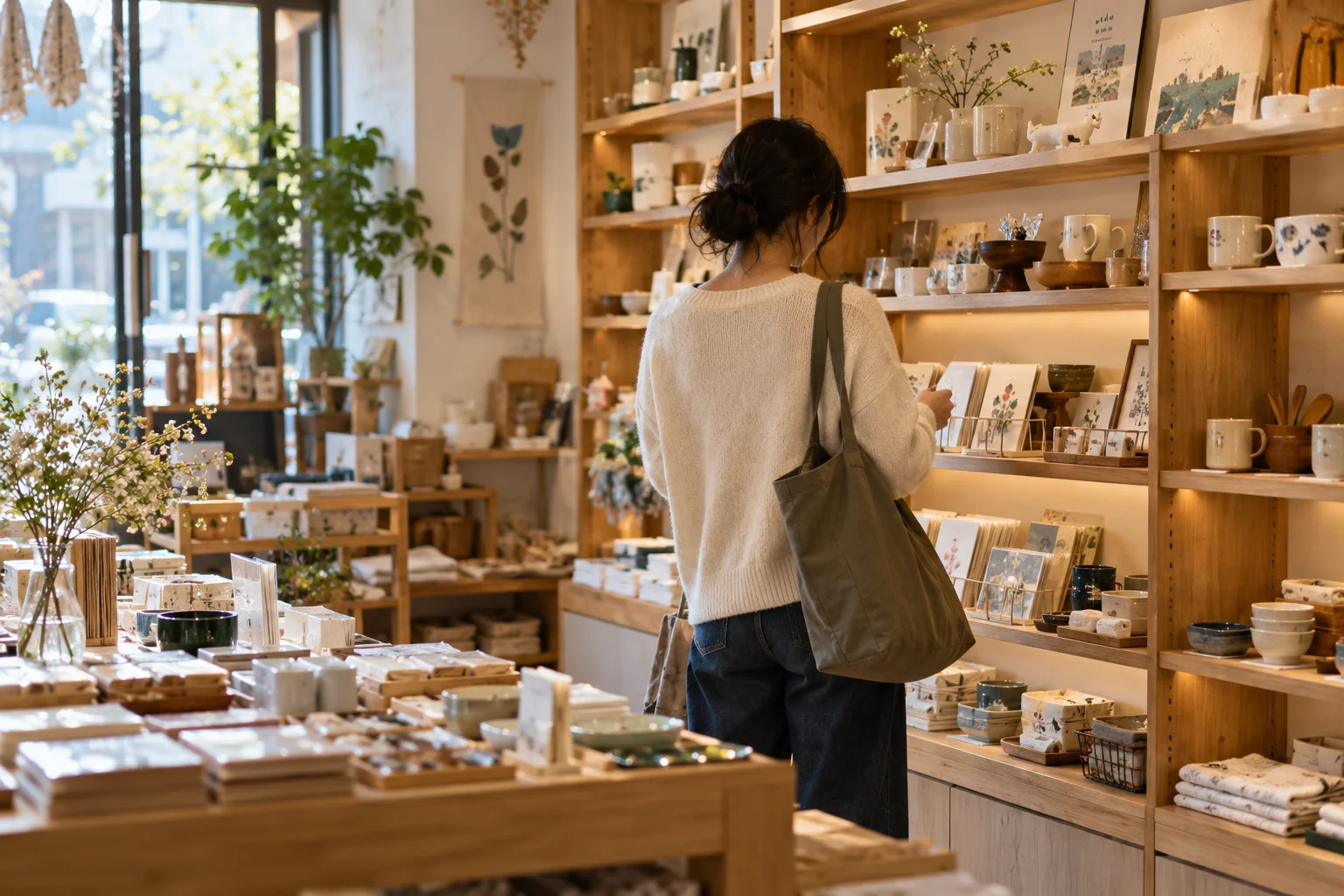
Show a photo or product name and ask “이거 있나요?” (“Do you have this?”). For a size or color, use “다른 사이즈 있나요?” or “다른 색 있나요?”. If a price tag or discount is unclear, ask “이 가격이 맞나요?” (“Is this the correct price?”). Do not assume a staff greeting means they expect you to buy something.
Decline and leave politely
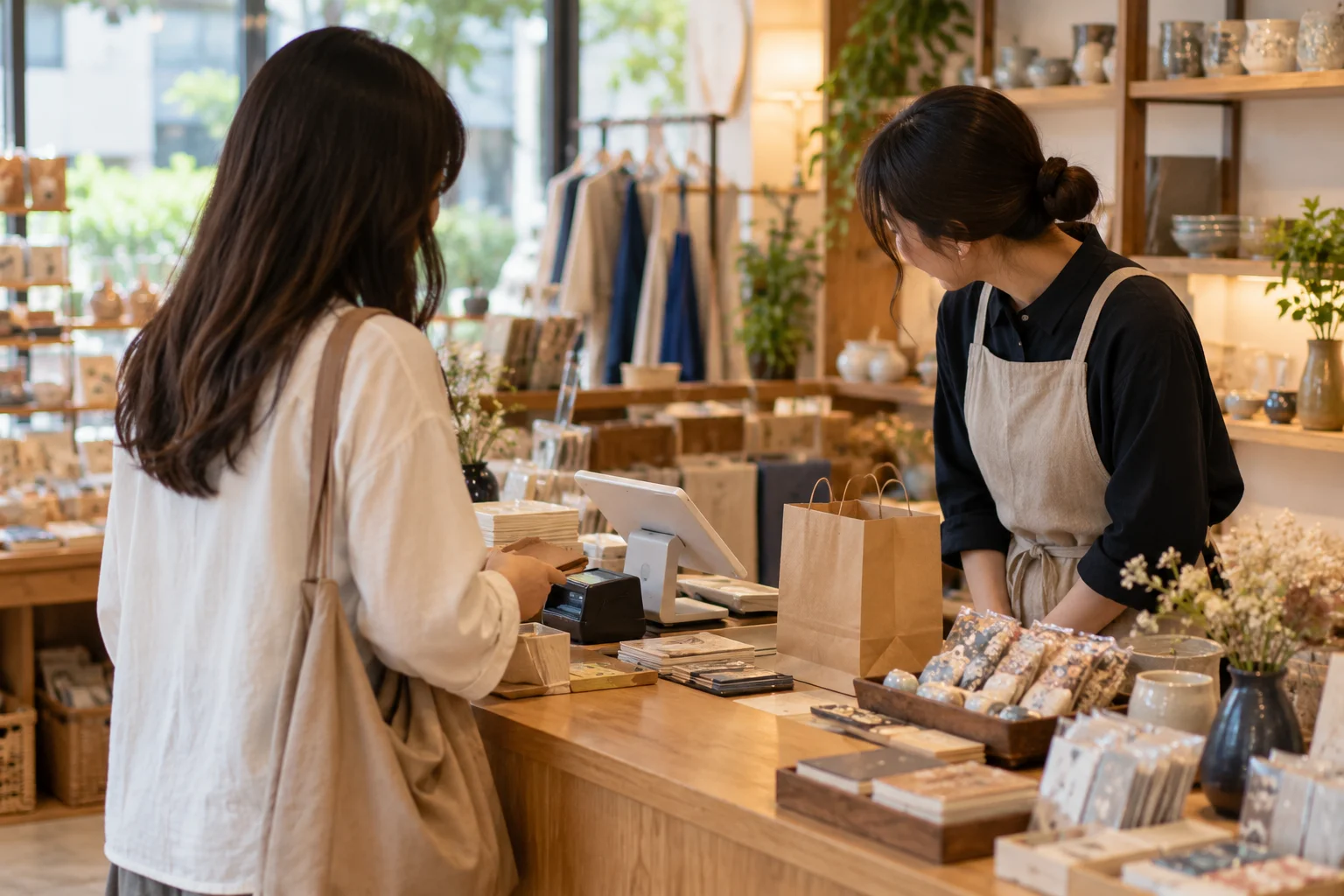
If an item is not right, “괜찮아요, 감사합니다” (“No thanks, thank you”) is a compact response. When leaving, “감사합니다” works whether or not you bought something. “안녕히 계세요” is also appropriate when you are leaving and the staff remain. Clear, courteous communication is enough.
A small script
| Moment | What you can say | Use |
|---|---|---|
| Entering | 안녕하세요. Annyeonghaseyo. |
Hello. |
| Browsing | 그냥 둘러보고 있어요. Geunyang dulleobogo isseoyo. |
I’m just looking. |
| Asking | 이거 있나요? Igeo innayo? |
Do you have this? |
| Declining | 괜찮아요, 감사합니다. Gwaenchanayo, gamsahamnida. |
No thanks, thank you. |
| Leaving | 감사합니다. Gamsahamnida. |
Thank you. |
This guide is about a short shop interaction, while broader Korean speech levels and social greetings deserve their own context. For word meanings and usage examples, consult the National Institute of Korean Language’s Korean-English Learners’ Dictionary. A phrase that sounds natural in a shop may not be the best wording in every formal setting.
Source checked September 30, 2026: dictionary linked above. The scenarios are instructional examples, not claimed personal experiences.
Make your meaning clear when declining help
괜찮아요 can mean “It is okay” or “No thanks,” depending on the question and situation. If staff are offering help, add 그냥 둘러볼게요 (Geunyang dulleobolgeyo, “I will just look around”) so they understand that you would like to browse. If you are declining an item, a small head shake with “괜찮아요, 감사합니다” helps clarify the refusal.
Choose the right goodbye
안녕히 계세요 (Annyeonghi gyeseyo) is said to someone who stays when you leave. 안녕히 가세요 (Annyeonghi gaseyo) is said to someone who is leaving. That is why staff may say “안녕히 가세요” to you at the door while your reply can be “감사합니다” or “안녕히 계세요.” You do not need to repeat the staff’s exact goodbye.
In a busy shop, keep the exchange brief and let staff continue serving other customers. If you need help, wait for a pause and start with 저기요 (Jeogiyo, “Excuse me”) before showing the product. The casual and polite Korean guide explains the speech levels behind these examples.
Common questions
Do I have to repeat 어서 오세요 to shop staff?
No. It is the staff’s welcome. A brief 안녕하세요 or polite acknowledgment is enough when you enter.
Which goodbye can I say when staff stay in the shop?
감사합니다 works whether or not you bought something. 안녕히 계세요 is appropriate when you leave and the staff remain.
고구마

Comments 댓글 0
Be the first to comment 첫 댓글을 남겨보세요.